

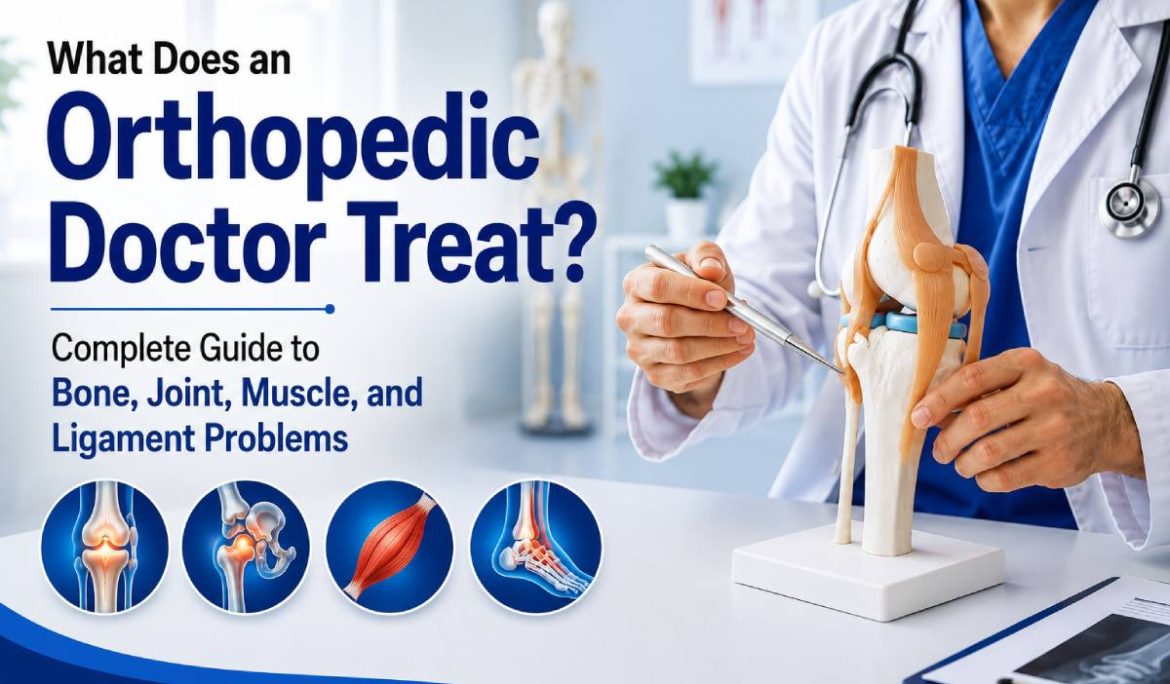
If you have persistent knee pain, a shoulder injury, hip pain, a fracture, a sports injury, or difficulty moving a joint, you may start searching online for an orthopedic doctor. But what exactly does an orthopedic doctor treat? The answer is much broader than broken bones.
An orthopedic doctor diagnoses and treats conditions affecting the musculoskeletal system, including the bones, joints, muscles, ligaments, tendons, and cartilage. Orthopedic care can involve both sudden injuries and long-term conditions such as arthritis and joint degeneration. Depending on the diagnosis, treatment may range from non-surgical care and rehabilitation to procedures such as arthroscopy, fracture fixation, osteotomy, and joint replacement.
For patients searching for an orthopedic doctor Thane, the more useful question is not simply: “Do orthopedic doctors treat my problem?” It is: “What could be causing my symptoms, and what type of orthopedic expertise do I need?”
This guide explains the major conditions treated by an orthopedic doctor, helping patients looking for the best orthopedic doctor thane understand when orthopedic care may be appropriate, how diagnosis works, when treatment may be non-surgical or surgical, and how to decide when an orthopedic consultation is appropriate.
Quick Answer: What Does an Orthopedic Doctor Treat?
An orthopedic doctor treats conditions involving the musculoskeletal system.
This includes problems affecting:
- Bones
- Joints
- Muscles
- Ligaments
- Tendons
- Cartilage
- Certain spine and musculoskeletal conditions
Common problems treated by an orthopedic doctor include:
- Knee pain and knee arthritis
- Meniscus injuries
- ACL and ligament injuries
- Shoulder pain and rotator cuff problems
- Hip arthritis and hip joint problems
- Fractures and dislocations
- Sports injuries
- Tendon injuries
- Cartilage injuries
- Joint degeneration
- Conditions requiring joint replacement
- Conditions requiring arthroscopy
- Selected spine-related musculoskeletal problems
- Certain conditions that may benefit from joint-preserving procedures
Treatment is not automatically surgical. An orthopedic doctor may recommend observation, activity modification, rehabilitation, medication, physiotherapy or other non-surgical measures when appropriate. Surgery may be considered when there is structural damage, significant functional limitation or another clinical reason for an operation.
What Is Orthopaedics?
Orthopaedics is the medical specialty concerned with the prevention, diagnosis and treatment of conditions affecting the musculoskeletal system.
The musculoskeletal system allows you to:
- Walk
- Stand
- Sit
- Bend
- Lift
- Run
- Exercise
- Maintain balance
- Perform everyday activities
It consists of interconnected structures.
Bones provide structure
Bones support the body and protect internal organs. Fractures, deformities, and certain bone disorders may require orthopedic evaluation.
Joints allow movement
The knee, hip, shoulder, ankle, elbow and other joints allow different parts of the body to move relative to each other.
Muscles create movement
Muscles work with bones and joints to produce movement and stability.
Ligaments provide stability
Ligaments connect bones and help stabilise joints. Injuries such as ACL tears are common examples.
Tendons connect muscle to bone
Tendon problems can develop because of acute injury, repetitive loading or degeneration.
Cartilage helps joints move smoothly
Damage to cartilage can contribute to pain, stiffness, and joint dysfunction.
Because these structures work together, a problem that feels like “joint pain” may actually originate from a ligament, tendon, muscle, cartilage or bone. That is one reason a proper orthopedic assessment matters.
What Conditions Does an Orthopedic Doctor Treat?
An orthopedic doctor may treat a wide range of conditions. Rather than looking at orthopaedics as one large category, it is useful to understand treatment by body region and type of problem.
1. Knee Problems
The knee is one of the most commonly treated joints in orthopaedic practice.
A patient may consult an orthopedic doctor for:
- Knee pain
- Knee arthritis
- ACL injuries
- Meniscus tears
- Cartilage damage
- Ligament injuries
- Knee instability
- Alignment problems
- Sports-related knee injuries
- Advanced joint degeneration
The cause of knee pain can vary significantly.
For example, pain in a young athlete after a twisting injury may indicate an ACL or meniscus problem, while gradual pain and stiffness in an older adult may be associated with osteoarthritis. Therefore, “knee pain” is a symptom, not a diagnosis.
An orthopedic doctor may assess:
- Where the pain occurs
- How it started
- Whether there was an injury
- Whether the knee swells
- Whether it locks or gives way
- How much movement is restricted
- Whether the pain affects walking or other activities
Treatment depends on the underlying condition. It may include rehabilitation and non-surgical care, arthroscopic procedures, joint-preserving treatment, or knee replacement when appropriate.
For patients looking for the best orthopedic doctor thane specifically for knee problems, it is worth checking whether the doctor has experience with both knee preservation and knee replacement, rather than assuming all knee pain requires the same treatment.
2. Knee Arthritis and Joint Degeneration
Osteoarthritis occurs when the tissues within a joint undergo degenerative changes.
The knee may gradually become:
- Painful
- Stiff
- Swollen
- Less mobile
- Difficult to load
Patients may notice symptoms while:
- Walking
- Climbing stairs
- Standing for long periods
- Getting up from a chair
- Exercising
- Performing daily activities
Treatment depends on the severity and pattern of joint damage.
An orthopedic doctor may consider:
- Activity modification
- Exercise and rehabilitation
- Weight management where appropriate
- Medication
- Other non-surgical treatment
- Joint-preserving procedures in selected patients
- Knee replacement in appropriately selected patients
Importantly, not every patient with arthritis needs a knee replacement. The decision depends on symptoms, function, examination, imaging, and response to other treatment options.
3. Meniscus Injuries
The menisci are pieces of cartilage within the knee that help distribute load and contribute to joint stability.
A meniscus can be damaged during:
- Twisting injuries
- Sports
- Falls
- Sudden changes in direction
- Degenerative changes
Symptoms can include:
- Knee pain
- Swelling
- Catching
- Locking
- Difficulty squatting
- Difficulty bending the knee
- A sensation that something is moving inside the joint
An orthopedic evaluation helps determine whether the symptoms are actually caused by a meniscus injury and whether treatment should be conservative or surgical. In selected cases, arthroscopy may be used to evaluate and treat the injury. The treatment decision depends on factors such as the type and location of the tear, symptoms, age, activity level, and associated joint problems.
4. ACL and Other Ligament Injuries
Ligaments help stabilise joints.
The anterior cruciate ligament (ACL) is particularly important for knee stability during activities involving:
- Running
- Jumping
- Pivoting
- Sudden direction changes
- Sports
An ACL injury can occur during sports or other activities.
Symptoms may include:
- A sudden popping sensation
- Swelling
- Pain
- Difficulty continuing activity
- Knee instability
- Feeling that the knee may give way
Not every ACL injury automatically requires surgery.
An orthopedic doctor evaluates factors such as:
- Degree of instability
- Associated meniscus or cartilage injuries
- Activity level
- Sports participation
- Age
- Functional requirements
In selected patients, ACL reconstruction may be considered. This is why a consultation should focus on diagnosis and treatment selection, rather than assuming that every ligament injury requires an operation.
5. Shoulder Problems
An orthopedic doctor may also evaluate a wide range of shoulder conditions.
These can include:
- Shoulder pain
- Rotator cuff injuries
- Shoulder instability
- Tendon injuries
- Shoulder arthritis
- Certain sports-related injuries
- Joint stiffness
- Traumatic injuries
Shoulder pain can have many causes. Pain when lifting the arm may come from the rotator cuff or other structures, while instability may be related to previous dislocation or ligament and labral problems. A detailed examination helps determine which structure is likely responsible.
Depending on the condition, treatment may include:
- Activity modification
- Rehabilitation
- Medication
- Physiotherapy
- Other non-surgical treatment
- Arthroscopy
- Repair procedures
- Joint replacement in selected cases
An orthopedic specialist with relevant shoulder and arthroscopy experience can help determine which pathway is appropriate.
6. Hip Problems
The hip is a major weight-bearing joint.
An orthopedic doctor may treat conditions involving:
- Hip pain
- Hip arthritis
- Joint degeneration
- Avascular necrosis
- Certain fractures
- Sports-related hip problems
- Conditions requiring hip replacement
Hip problems may cause pain in:
- The groin
- Thigh
- Buttock
- Hip region
They may also produce stiffness and difficulty walking.
Hip arthritis can gradually affect activities such as:
- Walking
- Climbing stairs
- Getting into a car
- Putting on footwear
- Standing for long periods
Treatment depends on the cause and severity. Non-surgical treatment may be appropriate in many situations, while hip replacement may be considered for selected patients with significant joint damage and functional impairment.
7. Avascular Necrosis and Other Hip Conditions
Avascular necrosis, also called osteonecrosis, occurs when blood supply to bone tissue is compromised, potentially causing bone damage. The hip is one of the commonly affected areas.
Symptoms may include:
- Hip or groin pain
- Difficulty walking
- Reduced hip movement
- Pain that gradually worsens
Early diagnosis can be important because treatment options can differ depending on the stage and extent of bone damage. An orthopedic doctor may use clinical assessment and imaging to determine the extent of the condition and discuss appropriate management. Depending on the individual case, treatment may involve non-surgical management, joint-preserving procedures, or joint replacement.
8. Fractures and Broken Bones
One of the most familiar reasons to see an orthopedic doctor is a fracture.
Fractures can occur because of:
- Falls
- Sports injuries
- Road traffic accidents
- Workplace injuries
- Direct trauma
- Fragility associated with weakened bones
Fractures vary substantially.
Some can be managed with:
- Casting
- Splinting
- Bracing
- Activity restriction
- Follow-up imaging
Others may require surgical fixation.
Fracture fixation
Depending on the fracture, fixation may involve:
- Plates
- Screws
- Intramedullary nails
- Other fixation devices
The goal is to restore appropriate alignment and stability while allowing the bone to heal.
An orthopedic surgeon assesses factors such as:
- Fracture location
- Displacement
- Stability
- Joint involvement
- Soft tissue condition
- Patient health
- Functional requirements
The decision between non-operative and operative treatment should be made after appropriate evaluation.
9. Sports Injuries
Sports injuries are another major part of orthopedic care.
An orthopedic doctor may treat injuries involving:
- Knees
- Shoulders
- Ankles
- Elbows
- Tendons
- Ligaments
- Muscles
- Cartilage
Common examples include:
- ACL injuries
- Meniscus tears
- Rotator cuff injuries
- Tendon injuries
- Ligament sprains or tears
- Joint instability
- Certain stress injuries
Sports injury treatment should not focus only on reducing pain.
The objective is also to restore:
- Strength
- Range of motion
- Stability
- Coordination
- Function
- Confidence during movement
For athletes, return-to-sport planning is an important part of rehabilitation. An orthopedic specialist may work alongside physiotherapists and other healthcare professionals during recovery.
10. Tendon Problems
Tendons connect muscles to bones.
They can become painful or damaged because of:
- Repetitive loading
- Overuse
- Sudden injury
- Sports
- Degenerative changes
Examples include:
- Tendinopathy
- Tendon tears
- Rotator cuff problems
- Achilles tendon injuries
- Tennis elbow
- Other overuse-related tendon conditions
Treatment depends on the specific tendon and severity of injury.
It may include:
- Activity modification
- Rehabilitation
- Progressive strengthening
- Medication where appropriate
- Bracing
- Other non-surgical care
- Surgery for selected significant tears or persistent problems
An orthopedic doctor in Thane can evaluate whether the symptoms are actually coming from a tendon or another nearby structure.
11. Muscle Injuries
Muscle strains and tears can occur during:
- Sports
- Exercise
- Sudden movements
- Falls
- Heavy lifting
Symptoms may include:
- Sudden pain
- Swelling
- Bruising
- Weakness
- Difficulty using the affected area
Many muscle injuries can be treated without surgery.
Treatment may involve:
- Activity modification
- Rehabilitation
- Progressive strengthening
- Gradual return to activity
However, significant injuries or persistent symptoms may require specialist evaluation.
12. Cartilage Problems
Cartilage helps joints move smoothly and absorb loads.
Cartilage damage may result from:
- Trauma
- Sports injuries
- Repetitive stress
- Joint degeneration
Symptoms may include:
- Pain
- Swelling
- Stiffness
- Catching
- Reduced movement
Cartilage problems can be difficult to diagnose based on symptoms alone because several knee and joint conditions can produce similar symptoms. An orthopedic assessment may involve examination and imaging.
Treatment depends on:
- Location of the cartilage defect
- Size
- Patient age
- Activity level
- Associated injuries
- Degree of joint degeneration
Selected patients may benefit from joint-preserving or cartilage-related procedures.
13. Joint Instability
A joint may become unstable after an injury to a ligament or other supporting structure.
Instability can affect:
- Knee
- Shoulder
- Ankle
- Other joints
Patients may describe:
- Giving way
- Feeling loose
- Repeated dislocation
- Loss of confidence during movement
An orthopedic doctor evaluates the underlying cause. Depending on the joint and diagnosis, treatment may include rehabilitation, bracing, activity modification, or surgical stabilisation.
14. Spine and Back-Related Musculoskeletal Problems
Orthopedic practice may also involve selected spine and musculoskeletal conditions affecting the back and neck.
These can include:
- Mechanical back pain
- Certain degenerative conditions
- Disc-related problems
- Musculoskeletal neck pain
- Some spinal injuries
However, not every back or neck problem is primarily orthopedic. Pain can have neurological, inflammatory, visceral or other causes. That is why persistent, severe, or unusual back pain should be properly assessed rather than self-diagnosed.
An orthopedic doctor may determine whether the condition falls within orthopedic care or whether another specialist is more appropriate. This distinction is particularly important for patients searching online for a top orthopedic doctor in Thane because a symptom such as back pain does not automatically tell you which specialist you need.
15. Osteoarthritis in Other Joints
Although knee arthritis is common, osteoarthritis can affect other joints as well.
These may include:
- Hip
- Shoulder
- Ankle
- Hand
- Other joints
Symptoms can include:
- Pain during activity
- Stiffness
- Swelling
- Reduced range of motion
- Difficulty performing normal activities
Treatment depends on the joint involved and the severity of degeneration. An orthopedic specialist may recommend non-surgical management initially and discuss surgical treatment when appropriate.
16. Osteoporosis-Related Orthopedic Problems
Osteoporosis weakens bones and increases the risk of fractures. An orthopedic doctor may become involved when a patient develops a fracture related to reduced bone strength.
For example:
- Hip fracture
- Vertebral fracture
- Wrist fracture
Orthopedic treatment addresses the fracture itself, while osteoporosis management may require coordinated care with another medical specialist.
This is an important distinction: Treating the fracture and treating the underlying bone-health problem are related but not always the same clinical task.
17. Dislocations and Joint Injuries
A dislocation occurs when the bones forming a joint are forced out of their normal position.
Dislocations can occur in:
- Shoulder
- Hip
- Knee
- Elbow
- Finger
- Other joints
A dislocation can damage surrounding:
- Ligaments
- Tendons
- Cartilage
- Nerves
- Blood vessels
For this reason, significant joint injuries should receive appropriate medical evaluation. Treatment may involve reduction, immobilisation, rehabilitation or surgery depending on the injury.
How Does an Orthopedic Doctor Diagnose These Problems?
Knowing what an orthopedic doctor treats is only the first step. The next question is: How does the doctor determine what is actually wrong?
A typical orthopedic evaluation may involve several stages.
1. Medical history
The doctor asks:
- When did symptoms begin?
- Was there an injury?
- What activities worsen symptoms?
- Is there swelling?
- Does the joint lock?
- Does it give way?
- Have you had previous treatment?
- Has the problem happened before?
2. Physical examination
The doctor may evaluate:
- Range of motion
- Strength
- Stability
- Tenderness
- Swelling
- Alignment
- Gait
- Joint-specific signs
3. Imaging
Depending on the suspected condition, the doctor may recommend:
- X-ray
- MRI
- CT
- Ultrasound
- Other investigations
Not every orthopedic condition requires every type of scan. The purpose of imaging is to answer a specific clinical question. Recent medically reviewed guidance similarly describes orthopedic assessment as beginning with medical history and physical examination, with imaging used when appropriate.
Does Every Orthopedic Problem Need Surgery?
No. This is one of the most important things patients should understand. An orthopedic doctor may recommend non-surgical treatment when appropriate.
Depending on the condition, this may include:
Rehabilitation
Exercise-based rehabilitation can restore strength, mobility, and function.
Activity modification
Reducing or changing activities that aggravate the condition can help recovery.
Medication
Medication may be used when appropriate to manage symptoms.
Bracing or support
Certain injuries may benefit from external support.
Observation
Some conditions can be monitored rather than treated immediately with surgery.
Injections
In selected conditions, injections may be considered as part of treatment.
Surgery is generally considered when it is clinically appropriate based on the diagnosis, structural damage, symptoms, functional limitations, and response to other treatment. This broad distinction is also reflected in current medically reviewed orthopedic guidance.
What Surgical Treatments Can an Orthopedic Doctor Provide?
An orthopedic surgeon may provide a wide range of surgical treatments depending on their specific training.
For Dr. Tushar Kadam, the website’s treatment architecture includes areas such as:
- Knee replacement
- Hip replacement
- High tibial osteotomy
- Distal femur osteotomy
- Arthroscopy
- ACL reconstruction
- Meniscus repair
- Fracture fixation
- Joint preservation
- Non-surgical orthopedic care
The practice’s treatment pages provide dedicated information for these areas. You can explore the full treatment structure on the Orthopedic Treatments page.
Knee Replacement
Knee replacement is considered for selected patients with significant knee joint damage when pain and loss of function substantially affect daily life. It is not simply a treatment for “any knee pain.”
An orthopedic surgeon considers:
- Severity of arthritis
- Symptoms
- Functional limitations
- Imaging
- Previous treatment
- Overall health
- Patient expectations
The objective is to determine whether replacement is appropriate and whether other options remain reasonable.
High Tibial Osteotomy and Joint Preservation
High Tibial Osteotomy, or HTO, is a joint-preserving procedure used in selected patients with knee alignment and arthritis-related problems. Instead of replacing the knee joint, the procedure aims to alter alignment and redistribute loading across the knee. HTO is not appropriate for every patient with knee arthritis.
Factors that influence consideration can include:
- Age
- Alignment
- Location and severity of joint damage
- Activity level
- Knee stability
- Overall joint condition
This is an important area of expertise to understand when evaluating an orthopedic doctor in Thane, particularly if you are exploring alternatives to knee replacement.
Hip Replacement
Hip replacement may be considered when significant hip joint damage causes persistent pain and functional limitation. Common causes include advanced arthritis and certain other conditions affecting the hip.
Treatment decisions depend on:
- Symptoms
- Imaging
- Functional limitations
- Overall health
- Response to previous treatment
A consultation should establish whether hip replacement is actually appropriate before surgery is planned.
Arthroscopy
Arthroscopy is a minimally invasive surgical technique that allows a surgeon to examine and treat certain joint problems through small incisions.
It can be used in selected conditions involving:
- Knee
- Shoulder
- Other joints
Examples include certain:
- Meniscus injuries
- ACL-related problems
- Rotator cuff conditions
- Cartilage problems
- Joint disorders
However, not every patient with a meniscus, ligament, or shoulder problem needs arthroscopy. The decision depends on the diagnosis and clinical circumstances.
Fracture Fixation
Some fractures need surgical fixation to restore alignment and stability. Depending on the fracture, fixation may involve plates, screws, nails, or other devices. The objective is to create an appropriate environment for bone healing while restoring function. Whether fixation is needed depends on the fracture pattern and clinical assessment.
Sports Injury Treatment
Sports injuries may require a combination of:
- Diagnosis
- Activity modification
- Rehabilitation
- Strength training
- Movement retraining
- Bracing
- Surgery in selected cases
The goal is not simply to make pain disappear.
For active patients, treatment should also consider:
- Function
- Stability
- Strength
- Return to activity
- Risk of reinjury
This is where orthopedic and sports medicine expertise can overlap. Athletes often look for a top orthopedic doctor in thane when recovering from sports-related injuries.
Non-Surgical Orthopedic Treatment
A strong orthopedic practice should not be defined only by its surgical procedures. Many patients need careful diagnosis and conservative treatment first.
Depending on the condition, non-surgical treatment can include:
- Activity modification
- Rehabilitation
- Physiotherapy
- Exercise
- Bracing
- Medication
- Other appropriate conservative measures
The decision depends on the condition. The purpose of non-surgical care is not simply to postpone surgery. For appropriate conditions, it may be the preferred treatment.
When Should You See an Orthopedic Doctor?
You do not have to wait until pain becomes severe before considering an orthopedic consultation.
An orthopedic doctor may be appropriate when:
- Joint pain persists
- Pain keeps returning
- Swelling continues
- Movement becomes restricted
- A joint repeatedly gives way
- You have sustained a significant injury
- You suspect a fracture
- Sports injuries are affecting activity
- Arthritis is affecting daily life
- Previous treatment has not helped
- You have been advised to obtain an orthopedic opinion
You should seek urgent medical attention for serious injuries, severe deformity, major trauma, loss of sensation, significant weakness, or other concerning symptoms rather than relying on an online article for diagnosis.
How to Choose an Orthopedic Doctor in Thane
If you are searching for an orthopedic doctor in Thane, don’t choose only on the basis of the word “best.”
Look at:
Qualifications
Check formal medical and orthopedic training.
Relevant expertise
Does the doctor treat your condition?
Procedure experience
If surgery may be needed, does the doctor have relevant experience?
Treatment philosophy
Are non-surgical and surgical options considered appropriately?
Professional background
Look at fellowship training, academic experience, and professional memberships where relevant.
Hospital affiliations
Understand where procedures and follow-up care are provided.
Patient communication
Does the doctor explain diagnosis and treatment options clearly?
Accessibility
Can you attend follow-up appointments comfortably?
These factors are much more useful than simply searching: best orthopedic doctor in Thane or top orthopedic doctor in Thane
Why Dr. Tushar Kadam’s Orthopedic Expertise Is Relevant to This Guide
Patients searching for an orthopedic doctor in Thane West may want to evaluate whether a doctor’s training and clinical focus match their condition.
Dr. Tushar Kadam’s published profile states that he completed his MBBS and MS in Orthopaedics at Seth G. S. Medical College and KEM Hospital, Mumbai. His professional background also includes senior residency and academic experience at KEM Hospital, followed by fellowship training in joint replacement and arthroscopy/sports medicine. Patients comparing a top orthopedic doctor in thane should review qualifications, fellowship training, and clinical expertise.
His professional information lists:
MBBS, MS Ortho (KEMH Mumbai), DNB Ortho, MNAMS, Fellowship in Joint Replacement and Arthroscopy.
His practice covers areas including:
- Knee and joint care
- Joint replacement
- Arthroscopy
- Fracture treatment
- Sports injuries
- Osteotomy
- Joint preservation
- Non-surgical orthopedic care
His professional profile also lists memberships including the Bombay Orthopaedic Society, Indian Arthroscopy Society, Maharashtra Orthopaedic Association, Indian Medical Association, and SICOT. For patients comparing an orthopedic doctor Thane, these are the kinds of objective details worth reviewing before making a consultation decision.
Dr. Tushar Kadam is an orthopedic surgeon associated with orthopedic diagnosis and treatment in Thane, with particular expertise across knee and joint care, joint replacement, arthroscopy, fractures, sports injuries, osteotomy, and non-surgical orthopedic care.
Orthopedic Doctor in Thane West: What Should You Expect From a Consultation?
If you are looking for an orthopedic doctor in Thane West, the consultation should ideally begin with understanding your problem rather than immediately discussing a procedure.
You may be asked about:
- Your symptoms
- How long they have been present
- Previous injuries
- Previous treatment
- Your work
- Exercise or sports activities
- Medical history
- Previous surgeries
- Current medications
The doctor may then examine the affected area and determine whether imaging or other tests are needed.
After diagnosis, the treatment discussion should address:
- What is wrong?
- What are the treatment options?
- Is surgery necessary?
- What happens if treatment is delayed?
- What will recovery involve?
This is the foundation of good orthopedic care.
What to Bring to an Orthopedic Appointment
To make your consultation more useful, bring:
- Previous X-rays
- MRI or CT scans
- Imaging reports
- Previous prescriptions
- Medical records
- Physiotherapy reports
- List of medications
- Details of previous surgeries
- Information about when symptoms started
Also make a note of:
- What triggers the pain
- What relieves it
- Whether there is swelling
- Whether the joint locks
- Whether the joint gives way
- How symptoms affect daily activities
This can help the orthopedic doctor understand the history of your condition more efficiently.
Common Questions About Orthopedic Doctors
What does an orthopedic doctor treat?
An orthopedic doctor diagnoses and treats conditions affecting bones, joints, muscles, ligaments, tendons, and cartilage. Common problems include arthritis, fractures, sports injuries, knee and shoulder conditions, ligament injuries, tendon problems, and joint degeneration.
Does an orthopedic doctor treat muscle problems?
Yes, orthopedic doctors may evaluate certain muscle injuries, strains, and tears, particularly when they are related to musculoskeletal injuries or sports.
Does an orthopedic doctor treat ligament injuries?
Yes. Orthopedic doctors and surgeons may diagnose and treat ligament injuries such as ACL injuries, depending on their area of expertise.
Does every orthopedic problem require surgery?
No. Many orthopedic problems can be managed with non-surgical treatment depending on the diagnosis and severity.
When should I see an orthopedic doctor for knee pain?
Consider an orthopedic consultation when knee pain persists, repeatedly returns, causes swelling or instability, limits movement, or affects your daily activities.
Can an orthopedic doctor treat arthritis?
Yes. Orthopedic doctors treat many forms of joint arthritis and can discuss both non-surgical and surgical options depending on severity.
What is the difference between an orthopedic doctor and an orthopedic surgeon?
An orthopedic surgeon is an orthopedic specialist with surgical training. Orthopedic surgeons can also diagnose conditions and provide non-surgical treatment.
What does an orthopedic specialist do?
An orthopedic specialist evaluates musculoskeletal conditions, establishes or investigates a diagnosis, and recommends appropriate treatment, which may be conservative or surgical depending on the condition.
Should I see an orthopedic doctor or physiotherapist first?
It depends on the situation. Persistent pain, significant injury, swelling, instability, suspected fracture, or unexplained symptoms may require medical assessment. A physiotherapist may be involved as part of rehabilitation once the appropriate diagnosis and treatment plan are established.
How do I find the best orthopedic doctor in Thane?
Look at qualifications, relevant orthopedic training, condition-specific expertise, treatment options, professional background, hospital facilities, patient communication, and follow-up care rather than relying only on the phrase best orthopedic doctor thane.
How do I find an orthopedic doctor in Thane West?
Search for qualified orthopedic specialists in Thane West and compare their training, clinical expertise, treatment areas, consultation location, and patient experience. Location is useful, but condition-specific expertise should remain a major factor.
What should I ask an orthopedic doctor during my first visit?
Ask about your diagnosis, what caused the problem, whether additional tests are needed, available treatment options, non-surgical alternatives, surgery if relevant, risks, and expected recovery.
Orthopedic Doctor vs Other Specialists
Not every pain in the body is necessarily an orthopedic problem.
For example:
- Joint pain may sometimes have inflammatory causes.
- Back pain may sometimes involve neurological conditions.
- Muscle pain may have systemic causes.
- Numbness may involve nerves rather than joints.
- Certain bone conditions may require oncology or other specialist input.
An orthopedic doctor can assess the problem and determine whether it falls within orthopedic care or whether another specialist should be involved. This is another reason why online symptom searches should not replace a clinical diagnosis.
Conclusion: What Does an Orthopedic Doctor Treat?
An orthopedic doctor treats much more than broken bones.
Orthopedic care covers a broad range of conditions involving:
- Bones
- Joints
- Muscles
- Ligaments
- Tendons
- Cartilage
- Selected spine and musculoskeletal problems
Patients may consult an orthopedic doctor for:
- Knee pain
- Arthritis
- ACL injuries
- Meniscus injuries
- Shoulder problems
- Hip conditions
- Sports injuries
- Fractures
- Tendon injuries
- Cartilage problems
- Joint degeneration
- Conditions requiring joint replacement or joint-preserving procedures
Treatment may be non-surgical or surgical, depending on the diagnosis. The most important step is to consult the best orthopedic doctor thane for an appropriate evaluation rather than deciding on treatment based on an online search.
It is to obtain an appropriate diagnosis and understand the available options.
Key Takeaway: An orthopedic doctor diagnoses and treats conditions affecting bones, joints, muscles, ligaments, tendons, and cartilage. Treatment may include non-surgical care, rehabilitation, or surgery depending on the diagnosis.
If you are searching for an orthopedic doctor Thane, evaluate the specialist based on relevant qualifications, orthopedic training, experience with your condition, treatment options, communication, and follow-up care.
Dr. Tushar Kadam’s published professional profile documents orthopedic postgraduate training at KEM Hospital, senior residency and academic experience, fellowship training in joint replacement and arthroscopy/sports medicine, and professional memberships.
Patients seeking an orthopedic doctor in Thane, particularly around Thane West, can review his professional profile and treatment areas before deciding whether an orthopedic consultation is appropriate for their condition.
Book an Orthopedic Consultation in Thane →
Frequently Asked Questions
What does Dr. Tushar Kadam specialise in?
Dr. Tushar Kadam is an orthopedic surgeon in Thane with expertise in knee and joint care, joint replacement, arthroscopy, fracture treatment, sports injuries, osteotomy, and non-surgical orthopedic care.
Does Dr. Tushar Kadam treat knee problems?
Yes. His treatment areas include knee and joint care, knee replacement, joint preservation, and procedures such as high tibial osteotomy, ACL reconstruction, and meniscus repair.
Does Dr. Tushar Kadam treat sports injuries?
Yes. His published treatment areas include sports injuries and arthroscopy-related care.
Does Dr. Tushar Kadam treat fractures?
Yes. Fracture treatment and fracture fixation are among the treatment areas presented on the practice website.
Where does Dr. Tushar Kadam provide orthopedic consultation?
Dr. Tushar Kadam’s practice is located in Thane West, Maharashtra. The current website should be checked for the latest appointment and clinic details before visiting.