

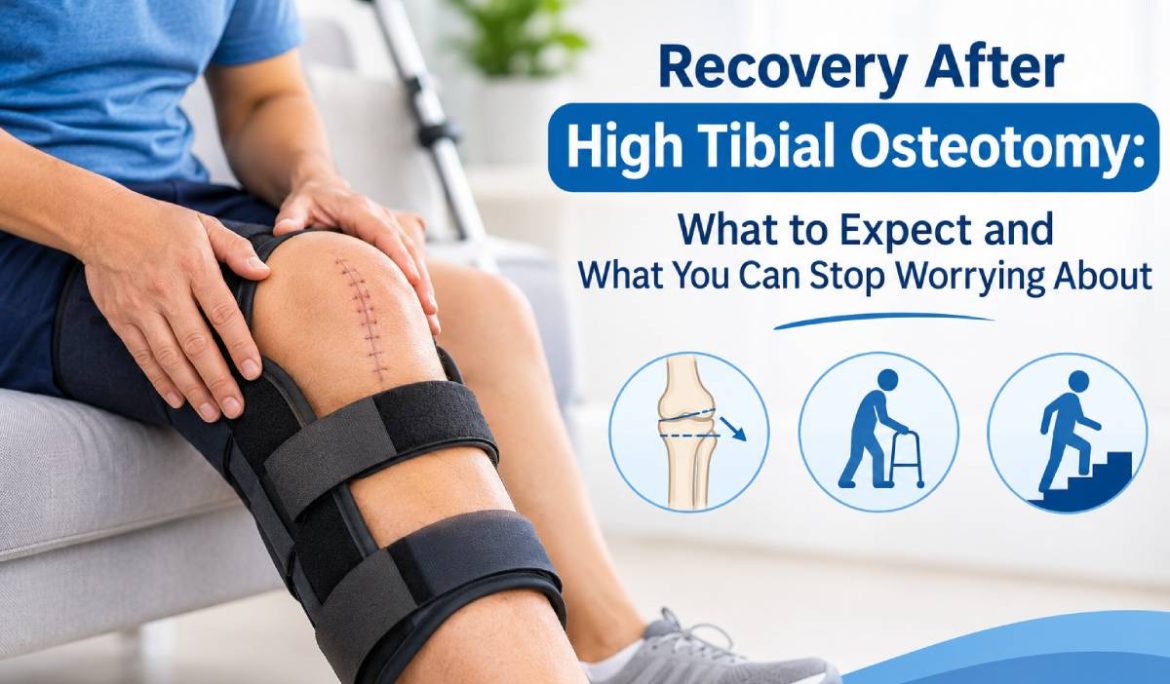
A week before his surgery, a 41-year-old patient from Mumbai asked me an unusual question. “Doctor, my mother says I must stop eating rice for two months; otherwise my stitches will not heal. Is that true?” It was a fair question. When you are about to have knee surgery, everyone around you has advice. A relative says avoid curd. A neighbour says no eggs. Someone else says you must never climb stairs again. Most of it comes from love, but much of it is simply not true.
High Tibial Osteotomy Surgery (HTO) is a joint preservation procedure that realigns the shinbone to reduce pressure on the worn part of the knee. Understanding High Tibial Osteotomy Recovery helps patients know what to expect after the procedure.
It’s a very good operation for the right patient, and recovery goes best when you know what is normal, what is not, and which myths to ignore. This guide explains High Tibial Osteotomy Recovery, common recovery challenges, rehabilitation, nutrition, and the precautions patients should follow.
What Is High Tibial Osteotomy, in Simple Words?
In a bow-legged (varus) knee, body weight falls mostly on the inner side of the joint, wearing the cartilage there faster. In HTO, the surgeon makes a precise cut in the upper shinbone (tibia) and gently reshapes it, then holds the new position with a small metal plate and screws until the bone heals.
The result is that your weight is shifted towards the healthier part of the knee. For younger, active patients, this can reduce pain and delay or even avoid knee replacement for many years. If you’d like to understand why alignment matters in the first place, we have explained this in our article on limb mal-alignment and knee arthritis. Because this surgery involves cutting and healing bone, not just soft tissue, recovery takes longer than a keyhole procedure. That’s normal. Bone simply needs time.
Who Needs High Tibial Osteotomy Surgery, and What Affects Recovery?
HTO is usually considered for patients with early to moderate arthritis on one side of the knee, caused by bow-leg alignment, who are still active and want to keep their natural joint. Several factors influence HTO Surgery Recovery and determine how effectively the bone heals and knee function improves.
- Smoking or tobacco use: nicotine slows bone healing and is one of the biggest preventable risks for poor healing
- Uncontrolled diabetes: raises the risk of wound infection and slower healing
- Obesity: puts extra load on the healing bone and the new alignment
- Low vitamin D or poor nutrition: common in India and can slow bone healing
- Not following weight-bearing instructions: putting full weight too early is a common cause of problems
- Poor adherence to physiotherapy, which leads to stiffness and weakness
- Your age, bone quality, and the size of correction planned also play a part
Myths vs Facts: Clearing the Confusion
These are some of the most common concerns patients discuss with a Knee Specialist in Thane when preparing for High Tibial Osteotomy Surgery. Let’s separate common myths from medical facts.
| Common Belief | The Reality |
| Eating rice will make my stitches worsen or delay wound healing | No. Rice does not affect stitches. Wounds heal through your body’s own repair process, helped by protein, vitamins, and good blood sugar control. Rice is a normal, safe source of energy. |
| Curd, buttermilk or cold foods cause infection or swelling | No. Curd and buttermilk are good sources of protein and calcium and are safe. Swelling comes from the surgery itself, not from cold or sour foods. |
| Eggs and non-vegetarian food will make the wound pus or heal badly | No. Eggs, chicken, and fish are excellent protein sources for healing. Vegetarians can get protein from dal, paneer, curd, milk, soy and sprouts. |
| Bed rest for weeks is the safest way to heal | No. Too much rest causes stiffness, weak muscles, and raises the risk of blood clots. Guided early movement is part of the recovery plan. |
| I’ll never be able to climb stairs or walk normally again | Not true. Most patients return to stairs, walking, and daily activity as bone heals and strength returns. |
| The metal plate must be removed after the bone heals | Not always. Many patients keep the plate for life. It is removed only if it is bothering you, usually after the bone has fully healed. |
| The plate will set off airport metal detectors every time | Rarely. Plates of this size seldom trigger detectors, but a surgeon’s card or discharge summary is useful to carry. |
| Pain after surgery means something has gone wrong | Not necessarily. Pain and swelling are expected, and are managed with medication, ice and elevation. Severe or worsening pain is what needs a call. |
| Turmeric milk or ghee will make the bone heal faster | Haldi doodh (turmeric milk) and ghee are fine as part of a normal diet, but they don’t speed up bone healing, and are not a substitute for protein, calcium and vitamin D. |
In short, there is no food in a regular Indian diet that will harm your stitches. What matters is eating enough, particularly protein, and avoiding what genuinely hurts healing: tobacco, alcohol, and uncontrolled blood sugar.
Diet After Knee Surgery: Nutrition for Better Bone Healing
A balanced Diet After Knee Surgery provides essential nutrients that support bone healing, tissue repair, and muscle recovery following HTO.
| What Your Body Needs | Good Indian Food Sources |
| Protein (for bone, muscle, and wound repair) | Dal, moong, chana, sprouts, paneer, curd, milk, eggs, chicken, fish, soy, tofu |
| Calcium | Milk, curd, paneer, ragi, sesame (til), green leafy vegetables |
| Vitamin D | Safe morning sunlight, eggs, fortified milk; supplements if your blood test shows deficiency |
| Vitamin C (for wound and collagen healing) | Amla, oranges, mosambi, guava, lemon, tomatoes, capsicum |
| Fibre and fluids (to avoid constipation from painkillers and reduced movement) | Vegetables, fruit, whole grains, isabgol if advised, plenty of water |
Practical diet tips
- Keep eating your regular home food, including rice, rotis, dal, sabzi and curd, as you normally would
- Including protein-rich foods in every meal is an important part of Diet After Knee Surgery and supports the body’s natural healing process.
- Avoid alcohol and tobacco in any form until your surgeon confirms the bone has healed
- If you have diabetes, keep blood sugar well controlled, as this protects your wound and bone
- Take calcium or vitamin D supplements only as advised, based on your blood reports
- Do not follow crash diets for weight loss during recovery; gradual weight management can begin once you’re moving well
High Tibial Osteotomy Recovery Timeline: Week-by-Week Guide
Every patient’s High Tibial Osteotomy Recovery Time is different. Weight-bearing instructions depend on the type of procedure, fixation method, and bone quality, so always follow your surgeon’s individual recovery protocol. This table gives a general idea.
| Stage | What to Expect |
| Day 0 to 3 (hospital) | Pain control, ice, elevation; ankle pumps and gentle knee movement begin; first walking with a walker or crutches with physiotherapist support; discharge in a few days |
| Week 1 to 2 | Rest with the leg raised, regular exercises at home; wound care; stitches usually removed around 10 to 14 days |
| Week 2 to 6 | Partial weight on the operated leg with crutches or walker, as advised; knee bending improves; swelling slowly settles; return to desk or work-from-home work often possible |
| Week 6 to 12 | First X-rays show bone healing; weight-bearing is progressively increased to full; walking without support; strengthening intensifies |
| Month 3 to 6 | Normal walking, stairs and most daily activities; return to commuting and household tasks; low-impact exercise such as cycling and swimming |
| Month 6 to 12 | Return to higher-impact activity and sport, if cleared; strength and balance are rebuilt |
The initial weeks of HTO Surgery Recovery are often the slowest because the bone needs sufficient time to heal before patients can gradually resume normal activities.
Recovery After HTO Surgery: Post-Operative Care at Home
- Elevate your leg when resting, and use ice packs as advised, to control swelling.
- Do your ankle pumps and prescribed exercises regularly throughout the day, as they help prevent blood clots.
- Keep the wound clean and dry; do not apply home remedies, powders or oils on it.
- Use crutches or a walker exactly as instructed, especially on slippery monsoon floors and bathrooms.
- Take blood thinners and pain medication exactly as prescribed, and don’t stop or add medicines on your own.
- Attend every follow-up and X-ray appointment, as these decide when you can increase weight on the leg.
Practical Home Care Tips During Recovery After HTO Surgery
- Use a Western commode or a raised toilet seat, rather than an Indian-style toilet, in the early months
- Avoid floor sitting and cross-legged sitting early on; use a chair for meals and puja
- Plan for stairs: if you live in a building without a lift, discuss a safe way to go up and down before you leave hospital
- Avoid crowded local trains and buses in the early weeks, as getting jostled while on crutches is risky
- Arrange help with heavy household tasks for the first few weeks
High Tibial Osteotomy Rehabilitation: Exercises and Recovery
High Tibial Osteotomy Rehabilitation is essential for restoring knee movement, rebuilding muscle strength and improving walking ability.
A typical physiotherapy programme progresses in stages:
- Early phase: ankle pumps, quadriceps (thigh) tightening, gentle knee bending, straight leg raises as advised
- Middle phase: improving knee range of motion, balance exercises, gradual weight-bearing, and walking practice
- Strengthening phase: closed-chain exercises such as mini squats and step-ups, and cycling on a stationary bike
- Return to activity phase: swimming, brisk walking, then jogging or sport only after your surgeon’s clearance
During High Tibial Osteotomy Rehabilitation, never push through sharp pain or skip prescribed physiotherapy sessions, even when your knee feels comfortable.
Warning Signs: When to Call Your Surgeon
Some swelling, bruising, and discomfort are expected.
But please contact your surgeon promptly if you notice:
- Fever, or redness, warmth, or discharge from the wound
- Increasing pain that is not controlled by prescribed medication
- Pain, swelling, or redness in the calf, which could signal a blood clot
- Numbness, tingling, or difficulty lifting the foot or toes
- A sudden fall, twisting injury, or a new clicking or give-way feeling in the operated leg
- Chest pain or sudden breathlessness, which is an emergency and needs immediate hospital care
Early reporting of a problem almost always leads to a simpler solution.
Follow-Up and Diagnosis During Recovery
Your surgeon will track healing and alignment at regular visits, usually with:
- Clinical examination of the wound, swelling, knee movement and strength
- X-rays at set intervals to confirm the bone is healing and the correction is holding
- Long-leg alignment X-rays in some cases, to check that the planned correction has been achieved
- Blood tests if needed, such as vitamin D, calcium, or blood sugar
Prevention Tips: Protecting Your Result
- Follow weight-bearing instructions to the letter, even when you feel ready to do more
- Stay tobacco-free, since smoking is one of the most common causes of delayed bone healing
- Maintain a healthy weight to protect both the new alignment and the rest of the knee
- Keep up leg strengthening exercises for the long term, not just during rehab
- Choose low-impact activity such as cycling, swimming, and walking for lifelong joint health
- Treat blood sugar, vitamin D deficiency, and other health issues in parallel
When Should You Consult a Knee Specialist in Thane?
If you are considering High Tibial Osteotomy Surgery, consult an experienced Knee Specialist in Thane if you experience the following symptoms:
- Knee pain mainly on the inner side, with a visible bow-leg appearance
- Knee pain that limits work, household activity, or sport, despite physiotherapy and weight management
- Been told you need a knee replacement, but you’re under 55 and active, and would like a joint preservation opinion
If you have already undergone surgery, consult your surgeon if you experience any warning signs or if your High Tibial Osteotomy Recovery is progressing slower than expected.
Frequently Asked Questions
1. How Long Is the High Tibial Osteotomy Recovery Time?
The High Tibial Osteotomy Recovery Time varies between patients. Walking with support usually starts within days, bone healing takes approximately 6 to 12 weeks, and most patients resume normal daily activities within 3 to 6 months. Returning to sports may take 6 to 12 months, depending on individual progress.
2. Does eating rice affect stitches or wound healing after knee surgery?
No. Rice does not affect stitches or delay wound healing. Wounds heal through the body’s natural repair process, which is supported by good protein intake, vitamins, and controlled blood sugar, not by avoiding rice.
3. What Should I Eat During Recovery After HTO Surgery?
Eat a balanced diet with protein at every meal, such as dal, eggs, chicken, fish, paneer, curd, or soy, along with calcium, vitamin D, and vitamin C sources, plenty of fluids, and fibre. There is no need to avoid regular home foods.
4. When can I put full weight on my leg after HTO?
This varies with the type of osteotomy and fixation, but weight-bearing is commonly progressed over about 6 to 12 weeks, guided by your X-rays. Always follow your surgeon’s individual instructions.
5. When Can I Return to Work During HTO Surgery Recovery?
Many office-goers return to desk work or work-from-home around 3 to 6 weeks, depending on pain, mobility, and commuting. Jobs involving long standing or heavy lifting usually need a longer break.
6. Is high tibial osteotomy painful?
There is pain and swelling in the early weeks, but it is managed with medication, ice, elevation, and early guided movement. Most patients find the pain settles steadily as the bone heals.
7. Will I need the plate removed after HTO?
Not routinely. Many patients keep the plate permanently. It may be removed after the bone has fully healed if it causes irritation or discomfort, usually a year or more after surgery.
8. When Can I Resume Squatting and Floor Sitting After High Tibial Osteotomy Surgery?
Deep squatting and prolonged floor sitting put extra stress on the knee and are best avoided early in recovery. Whether and how much you can return to them later depends on your knee and should be discussed with your surgeon.
Book a Consultation
If you’re preparing for high tibial osteotomy, recovering from it, or simply wondering whether joint preservation is right for you, you don’t have to rely on advice from relatives or the internet. At Tushar Nursing Home, patients receive detailed knee assessments, High Tibial Osteotomy Surgery, and structured rehabilitation planning from an experienced orthopaedic team serving Thane and Mumbai.
Call or WhatsApp us to book an appointment, or visit our clinic for a walk-in consultation. Expertise. Precision. Mobility.
References
- American Academy of Orthopaedic Surgeons (AAOS) — OrthoInfo: Osteotomy of the Knee, orthoinfo.aaos.org
- National Health Service (NHS), UK — Knee osteotomy overview and recovery, nhs.uk
- International Society of Arthroscopy, Knee Surgery and Orthopaedic Sports Medicine (ISAKOS) — Joint preservation resources, isakos.com
- Indian Orthopaedic Association — Patient resources, ioaindia.org
- Journal of Knee Surgery and Knee Surgery, Sports Traumatology, Arthroscopy — Peer-reviewed literature on HTO outcomes and rehabilitation
This article is for general patient education and does not replace an in-person medical consultation. Recovery protocols vary between patients and surgeons; please follow the instructions given by your own orthopaedic surgeon.