

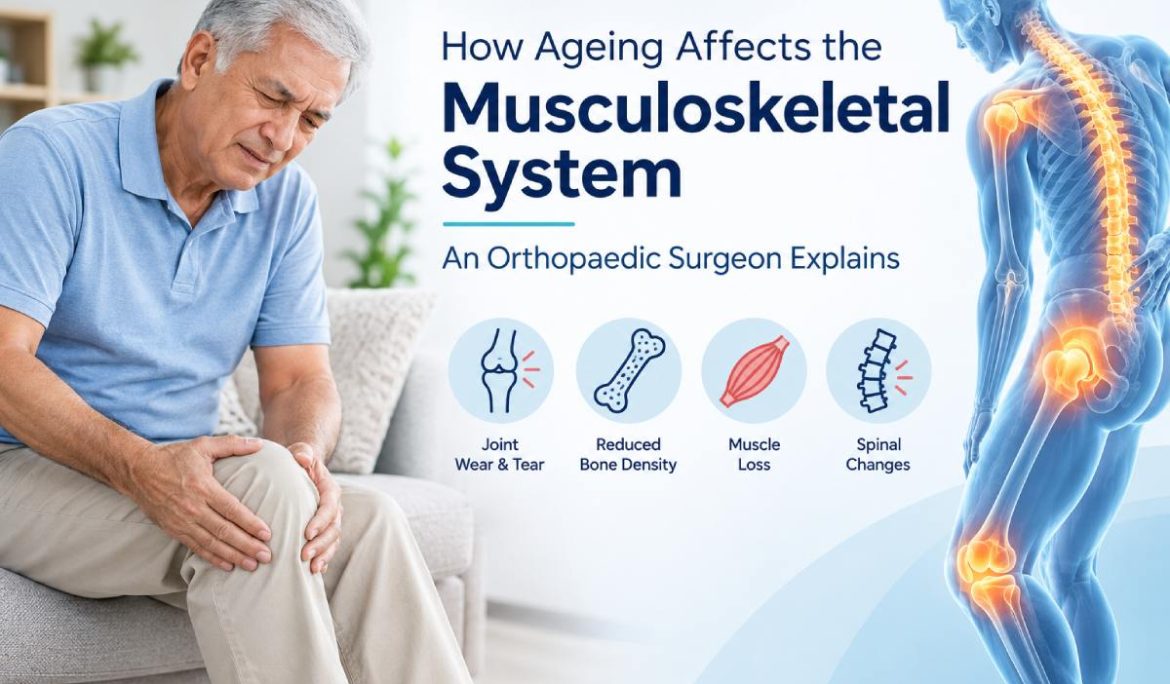
Growing older is a natural part of life. However, ageing does not simply add years; it also brings gradual changes to our bones, joints, muscles, ligaments, and spine. Many people believe that joint pain, back pain, or difficulty walking are “normal” parts of ageing that must simply be accepted. While certain age-related changes are expected, persistent pain, stiffness, or loss of function should never be ignored.
As an orthopaedic surgeon, one of the most common orthopaedic complaints I see among patients in Thane and Mumbai is pain that has been silently worsening for months or even years because people assumed it was “just old age.”
The good news is that modern orthopaedic care offers many effective treatments that can reduce pain, improve mobility, and help people remain active well into their later years. An orthopedic surgeon in Thane can evaluate age-related bone, joint, and muscle problems.
This article explains how ageing affects the musculoskeletal system, the warning signs to watch for, and when it is time to seek specialist care.
What is the Musculoskeletal System?
The musculoskeletal system includes:
- Bones
- Joints
- Cartilage
- Muscles
- Tendons
- Ligaments
- Spine
- Intervertebral discs
Together, these structures allow us to walk, lift, climb stairs, exercise and perform daily activities. The muscles and skeletal system work together to support movement and everyday function. As we age, each of these tissues undergoes natural wear and repair changes. Understanding how aging affects the body can help people recognise changes early.
How Does Ageing Affect the Musculoskeletal System?
1. Bones Become Less Dense
Bone is a living tissue that is constantly renewed. After approximately 30 years of age, bone formation gradually slows while bone loss increases. This leads to reduced bone density and weaker bones.
An assessment for musculoskeletal system health can help identify age-related changes early. The condition becomes more severe in people with osteoporosis, especially after menopause in women.
Consequences
- Increased risk of fractures
- Hip fractures
- Wrist fractures
- Spine fractures
- Delayed healing after injuries
2. Cartilage Wears Down
Cartilage acts as the smooth cushioning inside joints. With age, cartilage becomes thinner and loses its ability to absorb shock. This eventually leads to osteoarthritis.
Commonly affected joints include:
- Knees
- Hips
- Shoulders
- Hands
This is one of the leading causes of aging joints and chronic joint pain.
3. Muscles Lose Strength
Beginning around the fourth decade of life, muscle mass gradually decreases. This condition is known as sarcopenia. Appropriate skeletal muscle pain treatment may help when muscle symptoms affect daily activities.
Weak muscles can result in:
- Difficulty climbing stairs
- Poor balance
- Frequent falls
- Reduced stamina
- Slower recovery from illness or surgery
Fortunately, regular strength training can significantly slow this process. Regular exercise for musculoskeletal system health can help maintain strength and mobility.
4. Tendons and Ligaments Become Less Flexible
These tissues become stiffer with age. As a result:
- Movements become less flexible
- Sports injuries become more common
- Recovery after injury takes longer
Even simple activities such as gardening, lifting luggage, or household work can sometimes cause tendon injuries.
5. The Spine Changes
The spinal discs gradually lose water content. This causes them to become thinner and less elastic.
Age-related spinal changes can lead to:
- Chronic back pain
- Neck pain
- Slipped discs
- Sciatica
- Spinal stenosis
Many office workers develop these problems earlier because of prolonged sitting and poor posture.
Common Risk Factors That Accelerate Ageing of Bones and Joints
Although ageing cannot be stopped, several factors can speed up musculoskeletal degeneration. Knowing how aging affects the body can encourage healthier habits for long-term mobility.
| Risk Factor | Effect on the Musculoskeletal System |
| Physical inactivity | Weak muscles and bones |
| Obesity | Increased pressure on joints |
| Smoking | Poor bone healing and reduced bone density |
| Diabetes | Delayed healing and tendon problems |
| Vitamin D deficiency | Weak bones and muscles |
| Calcium deficiency | Increased fracture risk |
| Menopause | Rapid bone loss |
| Previous fractures | Higher chance of future fractures |
| Family history | Increased risk of arthritis and osteoporosis |
| Poor posture | Back pain and neck pain |
Early Symptoms You Should Never Ignore
Many people dismiss these symptoms until they become severe.
Watch for:
- Persistent joint pain
- Morning stiffness lasting more than 30 minutes
- Swollen joints
- Difficulty walking
- Recurrent back pain
- Neck pain with arm numbness
- Frequent falls
- Loss of height
- Stooped posture
- Bone pain
- Muscle weakness
- Difficulty climbing stairs
- Pain while getting up from a chair
These are not simply “signs of ageing.” They may indicate conditions that benefit from early diagnosis and treatment. A musculoskeletal specialist doctor can assess persistent symptoms and identify their underlying cause.
How Orthopaedic Surgeons Diagnose Age-Related Problems
Diagnosis begins with a detailed history and physical examination. An assessment for musculoskeletal system problems helps identify changes affecting movement and function.
Depending on your symptoms, investigations may include:
- Digital X-rays
- MRI scan
- CT scan
- Bone Mineral Density (DEXA) scan
- Blood investigations
- Vitamin D levels
- Calcium profile
Accurate diagnosis helps identify the exact cause rather than simply treating symptoms. A thorough assessment for musculoskeletal system concerns supports more targeted treatment. A musculoskeletal specialist doctor uses clinical findings and appropriate investigations to guide treatment.
Treatment Options
Treatment depends on the underlying problem and the severity of symptoms.
Lifestyle Modification
Many patients improve with:
- Weight management
- Activity modification
- Better posture
- Ergonomic workplace adjustments
Physiotherapy
Physiotherapy can be part of skeletal muscle pain treatment when weakness or discomfort persists.
Physiotherapy helps by improving:
- Joint mobility
- Muscle strength
- Balance
- Flexibility
- Walking pattern
It is often one of the most effective non-surgical treatments.
Medications
Depending on the diagnosis, treatment may include:
- Pain-relieving medicines
- Anti-inflammatory medicines
- Calcium supplements
- Vitamin D supplementation
- Osteoporosis medications
Medications should always be taken under medical supervision.
Injections
Selected patients may benefit from:
- Corticosteroid injections
- Viscosupplementation
- Platelet-Rich Plasma (PRP) in carefully selected cases
Not every patient requires injections, and the choice depends on individual assessment.
Surgery
Surgery is considered when conservative treatment fails. An orthopedic surgeon in Thane can discuss surgical options when appropriate.
Examples include:
- Joint replacement surgery
- Arthroscopy
- Fracture fixation
- Spine surgery
Modern surgical techniques often allow earlier mobilisation and improved outcomes.
Exercises That Help Slow Musculoskeletal Ageing
Regular exercise is one of the best investments for lifelong mobility. A suitable exercise for musculoskeletal system routine can support balance, strength, and flexibility.
Recommended activities include:
- Walking
- Strength training 2–3 times per week
- Balance exercises
- Stretching
- Swimming
- Cycling
- Yoga (under guidance if you have arthritis or spinal disorders)
Older adults should consult their doctor before beginning a new exercise programme. A suitable exercise for musculoskeletal system routine should be adapted to individual mobility and strength. A musculoskeletal specialist doctor can help tailor activity to your condition and mobility needs.
Healthy Lifestyle Habits for Strong Bones and Joints
Simple daily habits make a significant difference. Supporting the muscles and skeletal system helps maintain functional independence with age. Learning how aging affects the body helps support better bone, joint, and muscle health.
Eat a Balanced Diet
Include:
- Milk and dairy products
- Paneer
- Curd
- Green leafy vegetables
- Eggs
- Fish
- Nuts
- Pulses
- Protein-rich foods
Maintain a Healthy Weight
Every extra kilogram increases stress on weight-bearing joints, especially the knees and hips.
Get Adequate Vitamin D
Safe sunlight exposure and appropriate supplementation when advised can improve bone health.
Stay Active
- Avoid prolonged sitting.
- Office workers should stand up and move every 30-45 minutes.
Prevent Falls
Simple measures include:
- Good lighting
- Non-slip footwear
- Handrails in bathrooms
- Removing loose rugs
- Regular vision checks
Recovery Timeline
Recovery depends on the specific condition.
| Condition | Approximate Recovery |
| Mild muscle strain | 2–6 weeks |
| Early arthritis with | Several weeks to months |
| Stable fractures | 6–12 weeks |
| Osteoporosis treatment | Ongoing, with gradual improvement in bone strength over |
| Joint replacement surgery | Walking begins within days, with significant recovery over |
| Spine conditions | Varies from a few weeks to several months depending on |
Recovery is usually better when treatment is started early rather than after prolonged disability.
Why Home Remedies Are Not Always Enough
Many patients initially rely on home remedies such as hot fomentation, herbal oils, massage, pain balms or over-the-counter painkillers.
Consulting a top orthopedic doctor in Thane can help determine whether specialist evaluation is needed. While these may temporarily reduce discomfort, they do not treat the underlying cause of many orthopaedic conditions.
The drawbacks of delaying specialist care include:
- Progressive joint damage that may become irreversible.
- Worsening cartilage wear in osteoarthritis.
- Missed diagnosis of osteoporosis, increasing the risk of serious fractures.
- Undetected fractures that may heal in poor alignment if not treated promptly.
- Persistent back pain or neck pain caused by nerve compression that can worsen over time.
- Delayed treatment of tendon or ligament injuries, leading to prolonged weakness or instability.
- Temporary masking of symptoms with painkillers, allowing the disease to progress silently.
- Increased likelihood of requiring more extensive surgery if treatment is delayed.
Home remedies may provide short-term relief for minor muscle soreness after exertion, but persistent pain, swelling, deformity, inability to bear weight, numbness, weakness or loss of function should always be evaluated by an orthopaedic surgeon. Persistent muscle symptoms may require professional skeletal muscle pain treatment.
When Should You Consult an Orthopaedic Surgeon?
A top orthopedic doctor in Thane can guide diagnosis and treatment based on your symptoms.
Seek specialist care if you experience:
- Joint pain lasting more than two weeks.
- Back pain or neck pain associated with numbness or weakness.
- Difficulty walking or climbing stairs.
- Recurrent falls.
- Sudden swelling of a joint.
- A suspected fracture after a fall or accident.
- Pain that disturbs your sleep.
- Progressive deformity of a joint.
- Loss of independence in daily activities.
- Persistent pain despite home treatment.
Early diagnosis often leads to simpler treatment and better long-term outcomes. Consulting an orthopedic surgeon in Thane can help address persistent musculoskeletal concerns early.
Frequently Asked Questions
Is joint pain a normal part of ageing?
Occasional stiffness may occur with age, but persistent joint pain is not considered normal. It should be assessed to identify treatable conditions such as osteoarthritis, inflammatory arthritis or tendon disorders.
At what age do bones start becoming weaker?
Bone density generally begins to decline after the age of 30, with faster bone loss occurring after menopause in women and later in men.
Can exercise damage ageing joints?
No. Appropriate exercise strengthens muscles, improves joint support and helps reduce pain. High-impact activities may need modification depending on the condition.
How can I prevent osteoporosis?
Regular weight-bearing exercise, adequate calcium and vitamin D intake, avoiding smoking and excessive alcohol, and timely bone density testing for those at risk can help reduce the likelihood of osteoporosis.
Why does back pain become more common with age?
Ageing causes gradual wear of the spinal discs, joints and supporting ligaments. Poor posture, prolonged sitting, obesity and weak core muscles can further contribute to back pain.
Can older adults undergo joint replacement safely?
Yes. With proper medical evaluation and optimisation, many elderly patients successfully undergo joint replacement surgery and regain significant mobility and independence.
When should my elderly parents see an orthopaedic surgeon?
If they have persistent pain, repeated falls, difficulty walking, deformity, or a sudden inability to use a limb after an injury, they should be evaluated promptly.
Key Takeaways
- Ageing affects bones, joints, muscles and the spine, but many problems are treatable.
- Persistent orthopaedic complaints should not be dismissed as “normal ageing.”
- Early diagnosis helps prevent disability and improves quality of life.
- Exercise, proper nutrition and healthy lifestyle habits can slow age-related musculoskeletal decline.
- Timely consultation with an orthopaedic surgeon can often prevent complications and reduce the need for major surgery.
Need Expert Orthopaedic Care?
If you or a family member is experiencing persistent joint pain, back pain, neck pain, repeated fractures or difficulty with everyday activities, do not wait for the symptoms to worsen. Early evaluation by an experienced orthopaedic surgeon can help identify the underlying cause, provide the right treatment, and keep you active and independent for years to come.
If you are in Thane, Mumbai, or nearby areas, schedule a consultation to receive a personalised assessment and evidence-based treatment plan tailored to your condition.