
Your Neck Is Paying the Price for Your 9-to-5
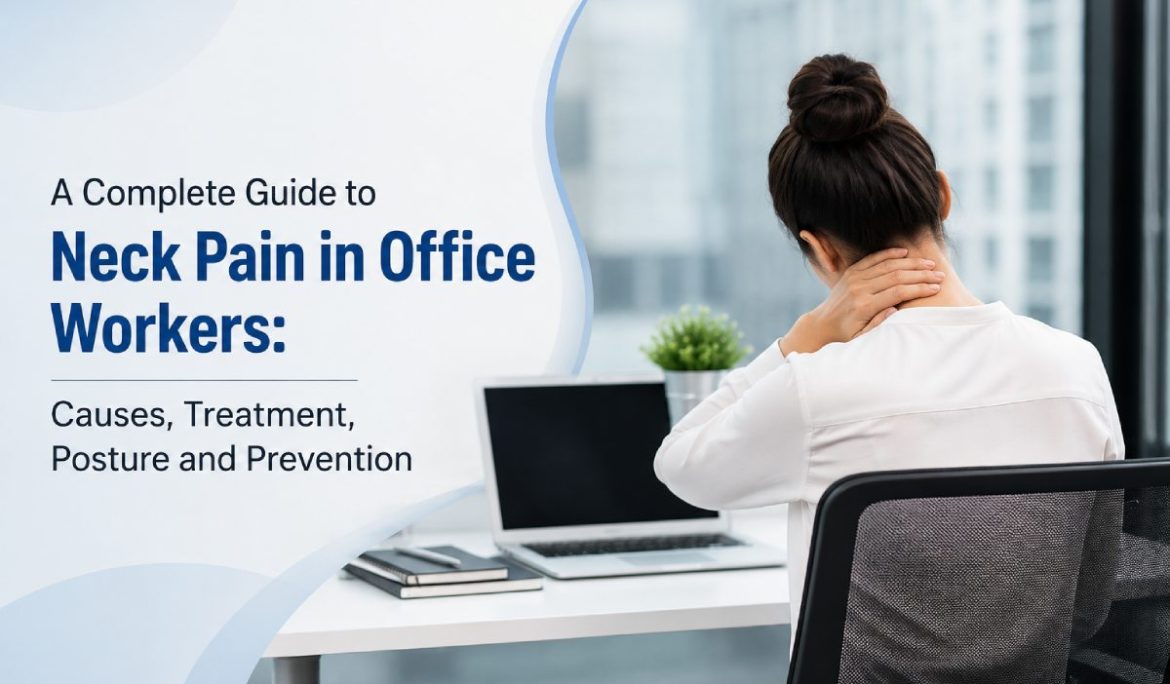
It creeps up on you gradually. By 11 am, there’s a dull ache at the base of your skull. By 3 pm, your shoulders feel like they’re made of concrete. By the time you finish your last Teams call and close the laptop, the stiffness has wrapped around your neck and turned into a throbbing headache.
Sound familiar? You are not alone. Neck pain is now one of the most common reasons working adults in Thane and Mumbai visit an orthopaedic clinic. The rise of remote work, back-to-back video calls, long commutes hunched over a phone, and hours of screen time have created a silent epidemic of cervical spine problems among people who are, in every other sense, perfectly healthy.
The frustrating part is that most people treat it as an inconvenience, popping a painkiller, applying Volini gel, and carrying on. They do not realise that untreated, persistent neck pain can progress from a postural problem to a disc issue, and from a disc issue to nerve compression with arm pain, numbness, and weakness.
This article explains what is actually happening in your neck, what the warning signs are that you should not ignore, and what the most effective treatments are, starting with simple changes you can make today. If symptoms persist despite these measures, consulting an orthopedic neck specialist helps identify the underlying cause early and determine the most appropriate treatment plan.
The Anatomy of Neck Pain: What Is Actually Going Wrong?
The neck (cervical spine) consists of seven vertebrae (C1-C7), separated by intervertebral discs, connected by facet joints, and surrounded by muscles, ligaments, and nerves. The spinal cord runs through a central canal, and nerve roots exit at each level to supply the arms, shoulders, and upper back.
When you sit at a desk, the head, which weighs between 5 and 7 kg in a neutral position, is the key variable. For every centimetre the head moves forward from its neutral alignment, the effective load on the cervical spine increases dramatically.
| The Physics of Forward Head Posture
At neutral posture (ears over shoulders): cervical spine carries ~5–7 kg of head weight. At 15 degrees forward tilt: effective load increases to ~12 kg. At 30 degrees forward tilt: ~18 kg. At 60 degrees forward tilt (looking at a phone in your lap): ~27 kg. Every hour at 60 degrees is the equivalent of loading your cervical spine with the weight of an average child. Over a working day, the cumulative effect on discs, facet joints, and muscles is immense. |
Common Causes of Neck Pain in Office Workers
1. Poor Sitting Posture and Forward Head Position
This is the root cause for the majority of desk-related neck pain. When the monitor is too low, too far away, or to one side, the neck is held in a non-neutral position for hours. The deep cervical flexors, the muscles responsible for maintaining correct head alignment, fatigue and disengage, and the superficial muscles (upper trapezius, levator scapulae) take over, becoming chronically tight and painful.
2. Prolonged Mobile Phone Use- Text Neck
‘Text neck’ is the term used to describe the cervical spine changes caused by prolonged downward gaze at a smartphone. With the average Indian professional spending 4-6 hours daily on their phone outside of work, the cumulative cervical load is significant. The commute on the local train from Thane to CST, heads bowed over phones for 60–90 minutes each way, is a daily cervical loading event that adds up over years.
3. Cervical Spondylosis (Disc Degeneration)
Cervical spondylosis is the age-related degeneration of the intervertebral discs and facet joints of the cervical spine. It begins in many people in their 30s, earlier in those with poor posture, heavy physical work, or a history of neck injury. As discs lose height and water content, the vertebrae move closer together, bone spurs (osteophytes) form, and the neural foramina (openings through which nerves exit) may narrow.
This is the structural foundation on which most adult neck pain in office workers sits. In many adults, cervical spondylotic changes develop gradually with age and prolonged poor posture, although not everyone experiences symptoms.
4. Cervical Disc Herniation
A cervical disc herniation (slip disc in the neck) occurs when the soft inner nucleus of a disc pushes through a tear in the outer annulus, pressing on the adjacent nerve root or spinal cord. This causes a very different pain pattern from simple muscle tension: sharp, electric-like pain that radiates down the arm, often with numbness and tingling in the hand.
5. Facet Joint Syndrome
The facet joints are the small paired joints at the back of each cervical vertebra that control movement and stability. They become painful when inflamed or arthritic, causing stiffness, localised neck pain, and headaches that originate from the back of the head and radiate forward.
6. Muscle Tension and Stress
Psychological stress is a significant and often underappreciated driver of neck pain. During periods of high workload, tight deadlines, and professional pressure common in Mumbai’s corporate environment, people unconsciously elevate their shoulders, clench their jaw, and hold their breath. The upper trapezius and suboccipital muscles go into sustained low-grade contraction, producing that familiar tight-band-around-the-head feeling.
Risk Factors for Office-Related Neck Pain
| Risk Factor | Why It Contributes |
| Monitor below eye level | Forces the head into flexion; most common ergonomic error |
| Single monitor to one side | Sustained lateral neck rotation causes unilateral muscle fatigue |
| Typing with raised shoulders | Chronic upper trapezius activation leads to trigger points |
| No lumbar support in the chair | Posterior pelvic tilt flattens the lumbar spine; cascades up to the neck |
| Phone held between the ear and the shoulder | Extreme lateral cervical flexion is a common cause of acute muscle strain |
| Working from bed or sofa | Removal of all ergonomic support; highly damaging over months |
| Long daily commute by train/road | Prolonged unsupported neck posture; vibration loading |
| Anxiety and workplace stress | Increases resting muscle tone in the upper trapezius and suboccipital muscles |
Symptoms: What Neck Pain Actually Feels Like
Not all neck pain is the same. The symptoms vary depending on which structure is involved and how severe the damage is.
Muscular / Postural Neck Pain
- Dull ache or stiffness across the back of the neck and upper shoulders
- Worse by end of day; eases with movement or rest
- Headache that starts at the base of the skull (cervicogenic headache)
- Tenderness to touch over the upper trapezius and sides of the neck
- Restricted range of motion; difficulty turning the head fully to one side
Cervical Radiculopathy (Nerve Root Compression)
- Sharp, shooting pain that travels from the neck down the arm, often to a specific finger or part of the hand
- Numbness or tingling in the arm, forearm, or fingers
- Weakness in the arm, hand grip, or shoulder
- Pain worsened by turning the head or looking up
- Relief when placing the hand on the head (reduces nerve tension)
Cervical Myelopathy (Spinal Cord Compression- Rare but Serious)
- Clumsiness in the hands, difficulty with fine motor tasks like typing, buttoning clothes
- Weakness or heaviness in both arms or legs
- Balance problems or unsteady walking
- Urinary urgency or difficulty (late sign)
One of the most common cervical spondylotic myelopathy causes is long-standing degeneration of the cervical spine that gradually narrows the spinal canal and compresses the spinal cord. Early cervical myelopathy treatment is essential because delaying treatment may allow this spinal disorder to progress, increasing spinal cord compression and the risk of permanent neurological deficits.
| Red Flags: Seek Urgent Assessment
These symptoms require immediate medical attention and should NOT be managed with home remedies or painkillers alone: • Neck pain after a road accident or fall, even if mild • Progressive arm weakness (things falling from your hand) • Difficulty walking, balance problems, or leg heaviness • Bladder or bowel changes alongside neck or arm symptoms • Severe neck pain with fever, weight loss, or night sweats |
Diagnosis: How Is Neck Pain Properly Assessed?
An accurate diagnosis requires more than an X-ray. Patients searching for the best neck specialist near me should look for an experienced spine surgeon or orthopedic neck specialist who combines clinical examination with imaging findings before recommending treatment. A thorough clinical assessment by an orthopaedic surgeon identifies the pain source, checks for nerve involvement, and guides the appropriate investigation.
Clinical Examination
- Cervical range of motion assessment- flexion, extension, rotation, and lateral bending
- Neurological examination of the arms- reflexes, sensation, and muscle strength in each nerve root distribution
- Spurling’s test- gentle compression with the head tilted toward the painful side; reproduces radicular arm pain if a nerve root is compressed
- Lhermitte’s sign- electric shock sensation down the spine on neck flexion; suggests spinal cord involvement
- Upper limb tension test- assesses nerve root tension and mobility
Imaging
| Investigation | What It Shows | When It’s Used |
| X-ray (cervical spine) | Disc height, bone spurs, alignment, instability | First-line; always obtained |
| MRI of cervical spine | Disc herniation, nerve compression, spinal cord, soft tissue | Gold standard; ordered for nerve symptoms or red flags |
| CT scan of cervical spine | Bony anatomy in detail; fractures, foraminal narrowing | When MRI unavailable or for surgical planning |
| Nerve conduction study (NCS/EMG) | Identifies which nerve root is affected; assesses severity | When arm weakness or sensory loss present |
| Dynamic X-rays (flexion/extension) | Detects instability between vertebrae | When ligamentous injury or instability suspected |
MRI is particularly valuable for identifying cervical spondylotic changes, spinal cord compression, and other conditions that may require specialist treatment. Patients with signs of spinal cord involvement should be referred to a cervical myelopathy specialist for further evaluation and timely management.
Treatment: A Step-by-Step Approach
The good news: the vast majority of office-related neck pain responds well to conservative treatment. Surgery is required in a small minority of cases. Here is a structured approach from first-line to advanced. Early cervical myelopathy treatment is particularly important when spinal cord compression is identified, as timely intervention improves long-term neurological outcomes.
Step 1: Immediate Pain Relief
- Short course of NSAIDs (ibuprofen, diclofenac): reduces acute muscle inflammation. Do not use continuously for more than 5–7 days without medical supervision
- Heat application to tight muscles: a warm shower, heat pad, or hot water bottle to the upper trapezius and base of skull for 15 minutes, 2–3 times daily
- Avoid complete rest: gentle movement is better than immobilisation. A soft cervical collar should only be used briefly after acute injury, not as a long-term crutch
Step 2: Physiotherapy
Physiotherapy is the cornerstone of recovery for both simple postural neck pain and more complex cervical pathology.
A good physiotherapist will:
- Identify and correct movement dysfunction and postural habits
- Use manual therapy (joint mobilisation and manipulation) to restore cervical range of motion
- Apply dry needling or trigger point therapy to release tight muscles
- Prescribe deep cervical flexor strengthening exercises; these are the muscles most weakened by desk posture
- Use traction (manual or mechanical) for nerve root compression symptoms
- Provide TENS or ultrasound therapy as adjunct modalities
Step 3: Workplace Ergonomic Correction
This is often the most impactful intervention and the one most commonly overlooked. No amount of physiotherapy will cure neck pain if the patient returns to the same posture for 8 hours a day.
| Ergonomic Problem | Simple Fix |
| Monitor too low | Raise screen so the top of the monitor is at eye level. Use books, a box, or a monitor stand. |
| Monitor too far away | Move screen closer so you can read comfortably without leaning forward. Arm’s length is a starting guide. |
| Chair too low | Feet flat on the floor, knees at 90 degrees, thighs parallel to the floor. |
| No lumbar support | Use a small cushion or rolled towel behind the lower back to maintain lumbar curve. |
| Phone held between ear and shoulder | Use a headset or speakerphone. Non-negotiable for anyone with neck pain. |
| Laptop without external monitor | Use a laptop stand to raise the screen + external keyboard to keep elbows at 90 degrees. |
| Working from bed/sofa | Always use a proper desk and chair. Even 1–2 hours on a sofa causes significant cervical loading. |
| No breaks | Set a timer every 45–60 minutes to stand, walk briefly, and do 2–3 neck stretches. |
Step 4: Specialist Interventions
Cervical Epidural Steroid Injection
For significant cervical radiculopathy (nerve root pain radiating into the arm) that is not responding to physiotherapy, a corticosteroid injection into the epidural space around the affected nerve root can provide significant, rapid relief. Done under X-ray or CT guidance, this is a precise, minimally invasive procedure.
Cervical Facet Joint Injection / Medial Branch Block
For facet joint-mediated neck pain or cervicogenic headache, targeted injections into the facet joints or onto the medial branch nerves that supply them provide both diagnostic and therapeutic benefit. Radiofrequency ablation (RFA) can provide longer-lasting relief if the facet joint is the confirmed pain generator.
PRP (Platelet-Rich Plasma)
Increasingly used for cervical disc and facet joint degeneration as a regenerative option. Evidence is still evolving but shows promise for chronic cervical pain in appropriately selected patients. Patients with persistent neurological symptoms may benefit from evaluation by a cervical myelopathy specialist to determine whether further intervention is required.
Step 5: Surgery (Reserved for Specific Indications)
Surgery for cervical spine is considered when:
- There is significant nerve root compression causing arm weakness that is not improving with conservative treatment after 6–8 weeks
- There is evidence of spinal cord compression (cervical myelopathy); this is more urgent and may require earlier surgical intervention
- The patient has had repeated episodes of severe radiculopathy and imaging shows a structural cause amenable to surgical correction
The most common cervical spine surgery is ACDF (Anterior Cervical Discectomy and Fusion) or cervical disc replacement (arthroplasty), both of which are performed through a small incision at the front of the neck. These are effective procedures with high patient satisfaction rates when properly indicated. When conservative care is unsuccessful or spinal cord compression progresses, cervical myelopathy surgery may be recommended to relieve pressure on the spinal cord and help prevent further neurological deterioration.
Before considering surgery, an orthopedic neck specialist will carefully assess your symptoms, neurological findings, and imaging to determine whether conservative treatment or surgery is the most appropriate option.
Exercises: A Daily Routine for Neck Pain Relief
These exercises can be done at your desk or at home. They take less than 10 minutes and make a significant difference when done consistently. Always move gently; do not push into pain.
1. Chin Tucks (The Most Important Exercise)
Sit upright. Gently draw your chin straight back as if making a ‘double chin’. Hold for 5 seconds. Release. Repeat 10 times. This activates the deep cervical flexors and reverses forward head posture. Do this every hour at your desk.
2. Upper Trapezius Stretch
Sit tall. Gently tilt your right ear toward your right shoulder. Place your right hand lightly on your head (do not pull). Feel the stretch along the left side of the neck. Hold 30 seconds. Repeat on the left. 3 repetitions each side.
3. Levator Scapulae Stretch
Sit tall. Turn your head 45 degrees to the right. Then tilt your chin down toward your right armpit. Use your right hand gently on the back of your head to deepen the stretch. Hold 30 seconds. You will feel this in the back left side of the neck. Switch sides and repeat.
4. Cervical Rotation (Active)
Slowly turn your head to the right as far as comfortable. Hold 2 seconds. Return to centre. Repeat to the left. 10 repetitions each direction. Maintains cervical rotation mobility and prevents stiffening.
5. Shoulder Blade Squeezes (Scapular Retraction)
Sit upright. Gently squeeze both shoulder blades together and slightly downward, like trying to hold a pencil between them. Hold 5 seconds. Release. 15 repetitions. Counteracts the rounded shoulder posture caused by desk work and reduces upper trapezius overload.
6. Wall Angels
Stand with your back flat against a wall. Feet 15 cm from the wall. Arms up in a ‘goalpost’ position, also touching the wall. Slowly slide both arms upward along the wall to an overhead position, keeping contact throughout. Slide back down. 10 repetitions. This restores thoracic mobility and resets upper back and neck alignment.
Recovery Timeline: What to Expect
| Condition | Expected Improvement Timeline | Key Milestones |
| Acute muscle strain/tension neck | 1-2 weeks | Pain reducing within 3-5 days with correct posture and gentle movement |
| Cervical spondylosis (no nerve symptoms) | 4-8 weeks | Significant improvement with physio and ergonomic correction |
| Cervicogenic headache | 4-6 weeks | Headache frequency and severity reduce with cervical treatment |
| Cervical radiculopathy (arm pain) | 6-12 weeks | Most resolve without surgery; nerve symptoms may linger 3-6 months |
| Post-injection recovery | Days to 2 weeks | Peak steroid effect at 1-2 weeks; benefit lasts weeks to months |
| Post-surgical recovery (ACDF) | 3-6 months | Pain relief early; full fusion and strength recovery takes 3-6 months |
Recovery following cervical myelopathy treatment varies depending on the severity of spinal cord involvement, the chosen treatment approach, and the patient’s overall health. Patients with persistent or recurring symptoms should follow up with the best neck specialist near me to monitor recovery and adjust treatment when necessary.
Prevention: Protecting Your Cervical Spine at Work
| The 10-Point Desk Worker’s Neck Protection Plan
1. Set your monitor at eye level, the single most impactful ergonomic change 2. Use a headset or speakerphone for all calls longer than 2 minutes 3. Take a 2-minute movement break every 45–60 minutes: stand, walk, stretch 4. Do chin tucks 10 times every hour at your desk 5. Keep your phone at eye level when browsing, not in your lap 6. Strengthen your deep neck flexors and upper back with targeted exercises 3–4 times a week 7. Check your sleeping position: one firm pillow that supports the neck in neutral alignment 8. Manage stress actively; it directly raises resting muscle tension in your neck and shoulders 9. Set up a proper workstation; even at home, the sofa and bed are not offices 10. Seek assessment for neck pain that persists beyond 2–3 weeks without improvement |
Persistent numbness, balance problems, or hand weakness should never be ignored, as they may indicate spondylotic cervical myelopathy rather than simple muscular neck pain.
When Should You See an Orthopaedic Surgeon?
Self-manage mild neck stiffness for 1-2 weeks. But see a specialist if:
- Neck pain has persisted for more than 3-4 weeks despite rest, stretching, and posture correction
- You have pain radiating from the neck into the arm, shoulder blade, or hand
- There is numbness, tingling, or weakness in the arm or hand
- Headaches are frequent (more than 3 per week) and originate from the neck
- The pain is waking you from sleep
- You have had a road accident or fall involving the neck region
- You are noticing clumsiness in your hands or difficulty with fine motor tasks
- You have tried physiotherapy, but symptoms are returning or worsening
Orthopaedic surgeons and spine specialists in Thane, Navi Mumbai, Mulund, and across the Mumbai region can provide a thorough assessment, appropriate imaging, and a clear management plan, whether that is physiotherapy, an injection, or surgical review. If you are searching for the best neck specialist near me, choose a spine specialist with experience in managing both postural neck pain and complex cervical spine disorders.
Frequently Asked Questions (FAQ)
Why does my neck hurt after working at a computer all day?
When you work at a desk, the head naturally drifts forward as you concentrate on the screen. This forward head posture places enormous mechanical stress on the cervical discs, facet joints, and the muscles at the back of the neck. The upper trapezius and levator scapulae, the muscles that support the neck and shoulder, are held in sustained low-grade contraction for hours, leading to fatigue, tightening, and pain. This is compounded by reduced movement, stress, and poor monitor positioning.
Is my neck pain serious or just tension?
Most office-related neck pain is postural or muscular and is not serious. It responds well to posture correction, physiotherapy, and targeted exercises. However, neck pain is more serious if it is accompanied by arm pain, numbness, tingling, hand weakness, clumsiness, or balance problems; these suggest nerve or spinal cord involvement and require specialist assessment. Similarly, neck pain after trauma, with fever, or with unexplained weight loss needs urgent evaluation.
What is cervical spondylosis and do I have it?
Cervical spondylosis is the age-related degeneration of the discs and joints in the neck. It begins in the late 20s and 30s in many people and is detectable on X-ray in the majority of adults over 50, though not all have symptoms. It is not a disease but a spectrum of ageing. It causes neck stiffness, pain, and can progress to nerve root compression (arm pain) or spinal cord compression if disc material or bone spurs narrow the spinal canal. The presence of spondylosis on X-ray does not mean surgery is needed; most cases are managed conservatively.
My neck pain is giving me headaches. Is that normal?
Yes, this is called a cervicogenic headache. It originates from the upper cervical spine (C1-C3) and refers pain forward into the head, temples, and even behind the eye. It is common in office workers with poor posture and differs from tension headache or migraine in that it is consistently triggered or worsened by neck movement or sustained neck posture. Treatment of the cervical spine through physiotherapy and posture correction resolves the headaches in most cases.
I have pain going down my arm from my neck. What does that mean?
Pain radiating from the neck down the arm is called cervical radiculopathy. It occurs when a disc herniation or bone spur compresses a nerve root as it exits the cervical spine. Different nerve roots produce pain in different parts of the arm and hand, for example, C6 compression causes pain and numbness in the thumb and index finger, while C7 compression affects the middle finger. Most cases (90–95%) resolve within 8–12 weeks with physiotherapy and, if needed, a cervical epidural steroid injection. Surgery is required in a minority of cases.
Can I use a cervical pillow for neck pain?
A well-designed cervical (orthopaedic) pillow that supports the natural curve of the neck during sleep can be helpful for people with chronic neck pain or cervical spondylosis. The ideal pillow keeps the neck in a neutral position, not flexed forward or extended backward. Memory foam and contoured cervical pillows are popular options. However, no single pillow suits everyone. If your current pillow causes neck stiffness in the morning, experimenting with pillow height and firmness is a reasonable first step.
How do I fix my posture at work to prevent neck pain?
The three most impactful changes are: raise your monitor to eye level, adjust your chair so your feet are flat and knees at 90 degrees, and keep your keyboard and mouse close enough that your elbows are at 90 degrees without reaching forward. Set a timer to take a 2-minute standing and stretching break every hour. Do chin tucks 10 times each hour at your desk. These changes, if maintained consistently, resolve most postural neck pain within 4-6 weeks.
Is physiotherapy enough for neck pain or do I need medication?
For most office-related neck pain, physiotherapy, particularly manual therapy and targeted exercises, is the primary treatment and is often sufficient on its own. Short-term NSAIDs can be added for acute pain to enable participation in physiotherapy. Long-term reliance on painkillers without addressing the mechanical cause is not appropriate and may mask a worsening condition. If physiotherapy is not providing adequate relief after 4-6 weeks, specialist review for injection therapy or imaging is the next step.
Can neck pain cause dizziness?
Yes, in some cases. The upper cervical spine (C1-C3) has connections with the vestibular system and the proprioceptive pathways that control balance. Cervicogenic dizziness, a feeling of unsteadiness related to neck position or movement, is a recognised condition. It is typically non-spinning (unlike inner ear vertigo) and associated with neck stiffness or pain. However, dizziness can have many causes, and cervical spine assessment by a trained physiotherapist or orthopaedic surgeon is important to confirm the neck as the source.
At what point does neck pain require surgery?
Surgery for neck pain is considered only in specific circumstances: progressive arm weakness from nerve root compression that is not improving with conservative treatment; spinal cord compression (cervical myelopathy) causing balance problems, hand clumsiness, or leg weakness; severe, unrelenting radiculopathy unresponsive to injections and physiotherapy; or structural instability requiring stabilisation. The vast majority of neck pain in office workers, even with disc herniations on MRI, does not need surgery and is successfully managed conservatively. In carefully selected patients with spinal cord compression, cervical myelopathy surgery can help prevent further neurological deterioration and improve long-term function.
| A Note from Our Practice
Neck pain from desk work is not inevitable, and it is not something you should simply push through. With the right ergonomic setup, the right exercises, and expert guidance when needed, the vast majority of people with office-related neck pain make a full and lasting recovery. But if your neck pain is accompanied by arm symptoms, frequent headaches, or has persisted for more than a month without improvement, it deserves a proper assessment, not another painkiller. A single specialist consultation may be all you need to understand what is happening and get on the right treatment path. Book a consultation today and give your neck the attention it has been asking for. |
This article is written for educational purposes and does not replace personalised medical advice. Please consult a qualified orthopaedic surgeon for diagnosis and treatment specific to your condition.