

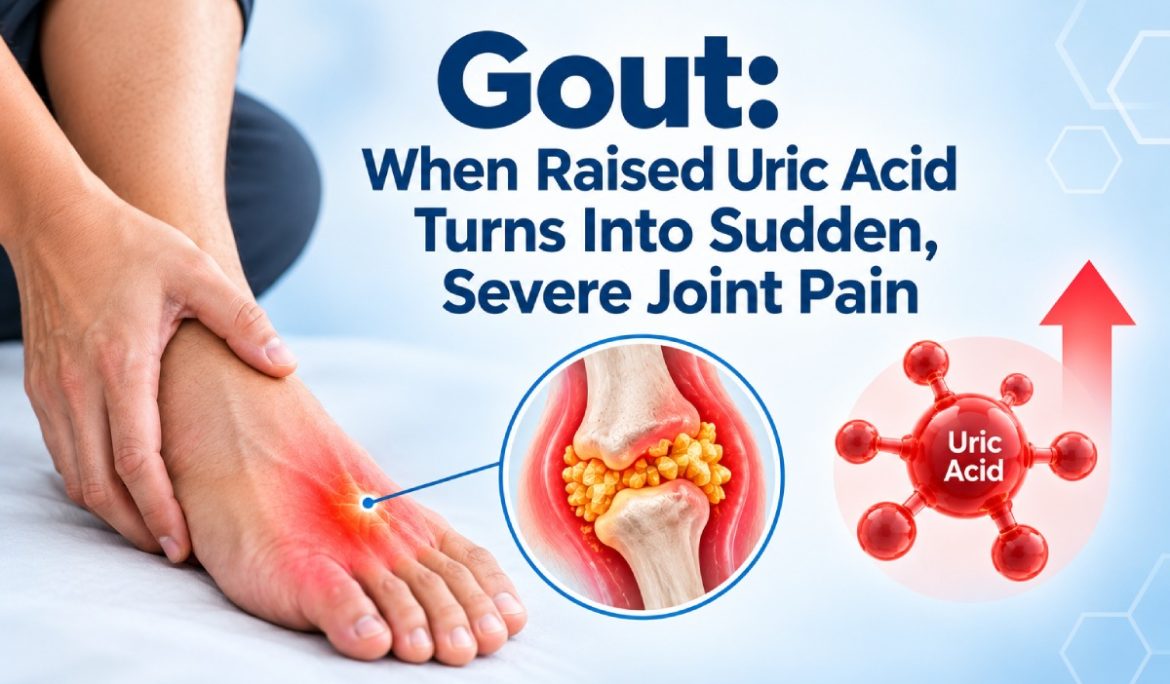
It usually starts at 3 am. A 38-year-old businessman from Thane once described it perfectly: “I went to bed completely fine. By midnight, my big toe felt like it was on fire. I couldn’t even let the bedsheet touch it.” He’d had a big family wedding two days earlier – plenty of mutton, prawns, and more than a few rounds of beer. He assumed he’d sprained his toe somehow. What he actually had was an acute gout attack, triggered by a sudden spike in uric acid after a rich, high-purine meal.
Gout is far more common in India than most people realise, and it’s showing up earlier – in office-goers in their 30s, not just in older adults. It’s also one of the most frequently misdiagnosed joint conditions, often mistaken for an injury, an infection, or simple “joint pain.”This article explains gout arthritis treatment, why the condition develops, how it is diagnosed, and what to eat or avoid to help manage symptoms and prevent recurring attacks.
What Is Gout?
Gout is a type of arthritis caused by too much uric acid building up in the blood – a condition called hyperuricemia. Uric acid is a waste product your body makes when it breaks down purines, substances found naturally in your body and in certain foods.
Normally, uric acid dissolves in the blood and is filtered out by the kidneys. But when there’s too much of it, or the kidneys aren’t clearing it efficiently, uric acid can form sharp, needle-like crystals that settle inside a joint. These crystals trigger a sudden, intense inflammatory reaction – and that’s what causes the severe pain, redness, and swelling of a gout attack.
Gouty arthritis most classically affects the big toe (a condition doctors call podagra), but it can also involve the ankle, knee, wrist, or fingers. Timely gout arthritis treatment and appropriate medical management can help control inflammation and reduce the risk of long-term joint damage.
Causes and Risk Factors for Raised Uric Acid
Gout develops when uric acid production increases, the kidneys excrete too little of it, or both.
Several factors raise this risk:
- Diet high in purines – red meat, organ meats (liver, kidney), and seafood such as prawns, sardines, and mackerel
- Alcohol, especially beer, which both raises uric acid production and reduces how well the kidneys clear it
- Sugary drinks and foods high in fructose, including packaged juices and sodas
- Obesity, which increases uric acid production and reduces kidney clearance
- Family history of gout or raised uric acid
- Certain medications, particularly diuretics (water pills) used for high blood pressure
- Chronic kidney disease, which reduces the body’s ability to excrete uric acid
- Other health conditions such as high blood pressure, diabetes, and high cholesterol, which commonly occur alongside gout
- Dehydration and crash dieting, both of which can trigger a sudden spike in uric acid levels
- Being male – gout is more common in men, though the gap narrows after menopause in women
People with persistently elevated uric acid levels should discuss high uric acid treatment with a healthcare professional, particularly if they experience recurring joint pain or swelling.
In our clinics across Thane and Mumbai, we see a clear pattern: festive season feasting, weekend parties with non-vegetarian food and alcohol, and busy office-goers skipping water throughout the day are among the most common triggers for an acute flare.
Symptoms and Warning Signs
High uric acid symptoms may go unnoticed initially, but a gout attack can cause sudden, severe joint pain, redness, and swelling that develops rapidly.
- Sudden, severe pain in a single joint, often starting at night or early morning
- Gout pain in big toe joint is a classic sign of an attack, although the ankle, knee, or wrist can also be affected.
- Visible redness and warmth over the joint
- Swelling that develops rapidly, sometimes within a few hours
- Extreme tenderness – many patients say even the weight of a bedsheet is unbearable
- Difficulty walking or bearing weight if the attack involves the foot or ankle
- Low-grade fever in some cases during a severe attack
- Peeling or itchy skin over the joint as the attack settles
With repeated, poorly controlled attacks over the years, some patients develop tophi, visible, chalky lumps of uric acid crystals under the skin, usually around the joints or ears. Recognising these signs early can help patients seek appropriate gout arthritis treatment and prevent further joint complications.
Gout vs Other Causes of Sudden Joint Pain
| Feature | Gout | Septic (Infected) Joint | Mechanical Injury |
| Onset | Sudden, often overnight | Sudden, with fever and feeling unwell | Sudden, usually after a fall or twist |
| Redness and warmth | Yes, intense | Yes, intense, often with fever | Possible, usually milder |
| Trigger | Rich meal, alcohol, dehydration | Often no clear trigger; may follow a cut or procedure | Clear injury or trauma |
| Urgency | Needs treatment within days | Medical emergency, needs same-day care | Needs assessment within days |
This distinction matters clinically – a severely swollen, red, hot joint with fever should never be assumed to be gout without ruling out infection first, since a septic joint needs urgent treatment.
How Is Gout Diagnosed?
- Clinical history and examination – sudden-onset pain, including gout pain in big toe joint, can suggest gout, although further tests may be needed to confirm the diagnosis.
- Serum uric acid blood test – measures the level of uric acid in the blood, though levels can occasionally be normal during an actual attack.
- Joint fluid aspiration – fluid is drawn from the affected joint with a fine needle and examined under a microscope for needle-shaped uric acid crystals; this is the most definitive test for gout.
- X-ray – may show joint changes in long-standing, poorly controlled gout, and helps rule out other joint damage.
- Ultrasound – can detect early uric acid crystal deposits in and around the joint, sometimes before visible symptoms worsen.
Joint fluid aspiration is also important because it helps rule out a joint infection, which can look similar to gout in its early stages but requires completely different, urgent treatment.
Treatment Options
Gout symptoms and treatment vary depending on the severity of the attack, kidney function, medical history, and whether long-term uric acid control is needed.
During an acute gout attack
- Rest and elevation of the affected joint
- Ice application to reduce swelling and pain
- NSAIDs (anti-inflammatory medication) to control pain and inflammation quickly
- Colchicine, a medication specifically effective for acute gout flares when started early
- Corticosteroids, either as tablets or a joint injection, for severe attacks or when other medications aren’t suitable
Long-term management (between attacks)
- Urate-lowering therapy, such as allopurinol or febuxostat, to keep uric acid levels consistently low and prevent future attacks
- Regular monitoring of blood uric acid levels to confirm the treatment is working
- Addressing related conditions such as high blood pressure, diabetes, and obesity, which often occur together with gout
Long-term gout arthritis treatment may involve urate-lowering medication, regular blood tests, and lifestyle changes. Do not start, stop, or adjust prescribed medication without medical advice; a clinician can guide treatment during an acute attack and ongoing uric acid management.
High uric acid treatment may include prescribed medication, regular monitoring, and suitable lifestyle changes based on the patient’s uric acid levels and medical history.
Dietary Precautions: What to Eat and Avoid
Diet plays an important supporting role in gout management. Understanding gout symptoms and treatment alongside appropriate dietary changes can help patients manage flare-up risks and support long-term care.
Foods and drinks to avoid or limit strictly
- Red meat, especially mutton, and organ meats such as liver and kidney
- Seafood high in purines – prawns, sardines, mackerel, and shellfish
- Alcohol, particularly beer, which has one of the strongest links to gout flares
- Sugary drinks, packaged fruit juices, and foods high in added fructose
- Excess intake of certain dals and legumes (such as rajma, chana, and urad dal) during active flares, though these are generally fine in moderation once uric acid is well controlled
Foods that can help
- Plenty of water throughout the day – good hydration helps the kidneys flush out uric acid
- Low-fat dairy products, such as milk and curd, which may help lower uric acid levels
- Cherries and vitamin C-rich fruits, which some studies suggest may reduce the frequency of attacks
- Whole grains, vegetables, and fruits as the base of most meals
- Coffee in moderation, which some evidence links to lower uric acid levels, if already part of your routine
A practical approach for most Indian households: keep non-vegetarian food and alcohol occasional rather than routine, drink water consistently through the day (not just when thirsty), and treat festive or party meals as something to plan around, not eliminate.
Exercise and Lifestyle Advice
- Maintain a healthy body weight gradually; rapid weight loss or crash dieting can actually trigger a gout attack by spiking uric acid
- Stay physically active with regular, moderate exercise such as walking, swimming, or cycling
- Avoid long periods of dehydration, especially important for office-goers who skip water during busy workdays
- Limit alcohol consistently, rather than only during an active flare
- Manage related conditions like high blood pressure and diabetes with your physician, since they’re closely linked to uric acid control
- During an acute attack, avoid putting weight on the joint and skip exercise until the inflammation has settled
Recovery Timeline
| Stage | What to Expect |
| First 24–48 hours of treatment | Pain and swelling typically start easing with NSAIDs, colchicine, or steroids |
| 3–7 days | Most acute attacks resolve substantially within a week with appropriate treatment |
| 2–4 weeks | Joint returns to normal function; uric acid-lowering therapy often started or adjusted during this period |
| Long-term (ongoing) | With consistent urate-lowering treatment and diet control, future attacks become less frequent and less severe over months to years |
Without proper long-term uric acid control, however, gout tends to recur, often more frequently and sometimes affecting more joints over time. Managing it well from the first attack makes a real difference.
Prevention Tips
- Don’t wait for a second attack to take gout seriously – the first episode is a strong warning sign worth acting on
- Keep non-vegetarian meals and alcohol occasional, especially around festive or celebratory occasions
- Stay consistently hydrated through the day, not just during a flare
- Avoid crash diets and extreme fasting, which can unexpectedly trigger an attack
- Get your uric acid levels checked periodically if you have a family history of gout
- Manage body weight gradually and sustainably rather than through sudden, drastic changes
- If you’re taking a diuretic for high blood pressure, ask your physician whether it may contribute to raised uric acid and whether your high uric acid treatment needs review.
When Should You Consult an Orthopaedic Surgeon?
- You have sudden, severe pain, redness, and swelling in a single joint, especially the big toe, ankle, or knee
- The joint pain came on rapidly, often overnight, without any clear injury
- You’ve had a similar episode before and suspect it could be gout
- Joint pain is accompanied by fever, which needs urgent evaluation to rule out infection
- You notice firm, chalky lumps developing near a joint, a possible sign of chronic tophaceous gout
- You have recurrent joint attacks despite dietary changes, suggesting you need structured, long-term uric acid-lowering treatment
An orthopaedic surgeon in Thane can assess the affected joint, arrange joint fluid aspiration when needed to confirm the diagnosis and rule out infection, and guide gout arthritis treatment alongside your physician where appropriate.
Frequently Asked Questions
1. What is the main cause of gout?
Gout is caused by raised uric acid in the blood, which can form sharp crystals that deposit in a joint and trigger sudden inflammation, redness, swelling, and severe pain. People experiencing high uric acid symptoms should seek medical evaluation rather than relying on symptoms alone.
2. Why does gout usually affect the big toe first?
The big toe is a common first site for gout because it’s cooler than the rest of the body and bears significant weight, both of which favour the formation of uric acid crystals in that joint.
3. What foods should be avoided in gout?
The big toe is a common first site for gout because it is cooler than the rest of the body and bears significant weight, which can favour crystal formation. Sudden gout pain in big toe joints, especially with redness and swelling, should be medically assessed.
4. Can gout be cured permanently?
Gout may not have a permanent cure, but it can often be controlled effectively with prescribed uric acid-lowering medication, dietary changes, and lifestyle modifications. A clinician can explain gout symptoms and treatment options based on the patient’s condition and medical history.
5. Is gout only a problem for older people?
No. While gout is more common with age, it’s increasingly seen in younger adults in their late 20s and 30s, often linked to diet, alcohol intake, and obesity.
6. How do I know if my joint pain is gout or an infection?
Gout typically follows a trigger like a heavy meal or alcohol and improves with anti-inflammatory treatment, while an infected joint often comes with fever and feeling generally unwell and needs urgent medical evaluation – a joint fluid test can clearly distinguish between the two.
7. Does drinking more water help prevent gout?
Yes. Staying well hydrated helps the kidneys flush out uric acid more effectively, and consistent hydration is one of the simplest, most effective habits for reducing gout flare-ups.
Book a Consultation
If you’ve had sudden, severe joint pain, especially in your big toe, ankle, or knee, seek a proper medical evaluation rather than waiting for another attack. At Tushar Nursing Home, patients across Thane and Mumbai can receive orthopaedic assessment for suspected gout, including joint aspiration when clinically indicated. Timely gout arthritis treatment can help control symptoms and reduce the risk of recurring attacks.
Call or WhatsApp us to book an appointment, or visit our clinic for a walk-in consultation. Expertise. Precision. Mobility.
References
- American College of Rheumatology – Gout patient education resources, rheumatology.org
- National Health Service (NHS), UK – Gout overview and dietary advice, nhs.uk
- Arthritis Foundation – Gout diet and lifestyle guidance, arthritis.org
- Indian Rheumatology Association – Patient resources on gout and hyperuricemia, indianrheumatology.org
- Mayo Clinic – Gout: Symptoms, causes, and treatment, mayoclinic.org
This article is for general patient education and does not replace an in-person medical consultation. Please consult an orthopaedic surgeon or physician for diagnosis and treatment specific to your condition.