


A 27-year-old software engineer from Thane once told me something that stuck with me: “Doctor, I’m young. I work out. Why does my back feel like a 60-year-old’s every morning?” He had been blaming his office chair, his mattress, even his gym routine for nearly a year. He’d tried hot water bags, pain balms, and a new ergonomic chair. Nothing truly fixed it – because what he had wasn’t ordinary back pain from sitting too long. It was inflammatory back pain, and it needed a very different kind of treatment.
Most back pain in office-goers, homemakers, and the working class is “mechanical” – caused by posture, muscle strain, or a disc issue, and it usually eases with rest. But a smaller group of patients, often younger than you’d expect, have back pain driven by inflammation inside the joints of the spine. This type behaves differently, needs different tests, and responds to a completely different treatment approach.
This is particularly important when evaluating back pain in young adults, especially when persistent morning back stiffness does not improve with rest or routine pain relief. If you’re wondering, “Why is my back stiff in the morning?”, the pattern and duration of your symptoms may provide important clues. This article explains how to tell the two apart, what causes inflammatory back pain, and when it’s time to see an orthopaedic surgeon rather than just stretching it out.
What Is Inflammatory Back Pain?
Inflammatory back pain is non-mechanical back pain caused by the body’s immune system mistakenly attacking the joints and ligaments of the spine, instead of pain coming from wear, strain, or a mechanical problem like a slipped disc. It’s most commonly linked to spondyloarthritis, particularly ankylosing spondylitis.
Recognising ankylosing spondylitis symptoms early, including persistent spinal stiffness and pain that improves with movement, can help patients seek timely evaluation. Learn more about common spinal disorders and their treatment options and how they can affect spinal mobility.
Rheumatoid arthritis, which usually affects smaller joints like the hands and wrists, can occasionally involve the neck portion of the spine as well. The key difference patients need to understand is this: mechanical back pain is usually a local, wear-and-tear problem. Inflammatory back pain is a whole-body immune condition that happens to show up in the back first.
Mechanical vs Inflammatory Back Pain: Quick Comparison
| Feature | Mechanical Back Pain | Inflammatory Back Pain |
| Typical age of onset | Any age, common after 35–40 | Usually under 40, often in 20s–30s |
| Pattern of pain | Worse with activity, better with rest | Worse with rest, improves with movement/exercise |
| Morning stiffness | Mild, resolves in under 30 minutes | Significant, often lasts more than 30–60 minutes |
| Night pain | Uncommon, or eases when lying still | Often wakes the person in the second half of the night |
| Response to rest | Improves | Worsens or stays the same |
| Associated symptoms | Usually none | May include eye redness, joint swelling elsewhere, fatigue, psoriasis, or gut symptoms |
| Onset | Often sudden, after lifting or injury | Gradual, developing over weeks to months |
For practical advice on posture and desk-related discomfort, read our guide to managing back pain in office workers.
Causes and Risk Factors
Inflammatory back pain isn’t caused by poor posture or a single injury.
It’s driven by the immune system, though several factors increase the risk:
- Genetic factor (HLA-B27) – a gene strongly linked to ankylosing spondylitis; many patients with this gene have a family history of the condition
- Family history of autoimmune or inflammatory joint disease, including rheumatoid arthritis or psoriatic arthritis
- Age under 40 at the time symptoms begin – this is one of the strongest clues doctors look for
- Being male – ankylosing spondylitis is more common and often more severe in men, though it’s increasingly recognised in women too
- Associated autoimmune conditions – psoriasis, inflammatory bowel disease (Crohn’s or ulcerative colitis), or recurrent eye inflammation (uveitis)
- Chronic, unexplained fatigue alongside back symptoms
It’s worth noting that this condition is often under-diagnosed in India because early symptoms are mistaken for routine postural back pain from desk jobs or household work, delaying diagnosis by several years in some cases.
Symptoms and Warning Signs
Doctors use clinical clues such as age, prolonged stiffness, and improvement with exercise to identify potentially inflammatory back pain. Common ankylosing spondylitis symptoms include persistent discomfort and stiffness after rest. If you ask, “Why is my back stiff in the morning?”, pay attention to whether the stiffness lasts more than 30 minutes and eases with movement.
- Back pain and stiffness lasting more than 3 months, starting before age 40
- Morning stiffness in the back lasting longer than 30 minutes
- Pain that improves with movement or exercise, but not with rest
- Pain that wakes you up in the second half of the night, often with difficulty turning over in bed
- Alternating buttock pain (pain that shifts from one side to the other)
- Swelling or pain in other joints, such as the knee, ankle, or heel
- Eye redness or pain (uveitis), which can occur alongside the back symptoms
- Unexplained fatigue that doesn’t match your activity levels
Your sleeping posture can influence some types of back discomfort; explore our guide to the best sleeping position for back pain. A useful rule for patients: ordinary backache from sitting or lifting rarely wakes you up at 3 am. If your back pain does, and it’s been going on for months, it deserves a proper look.
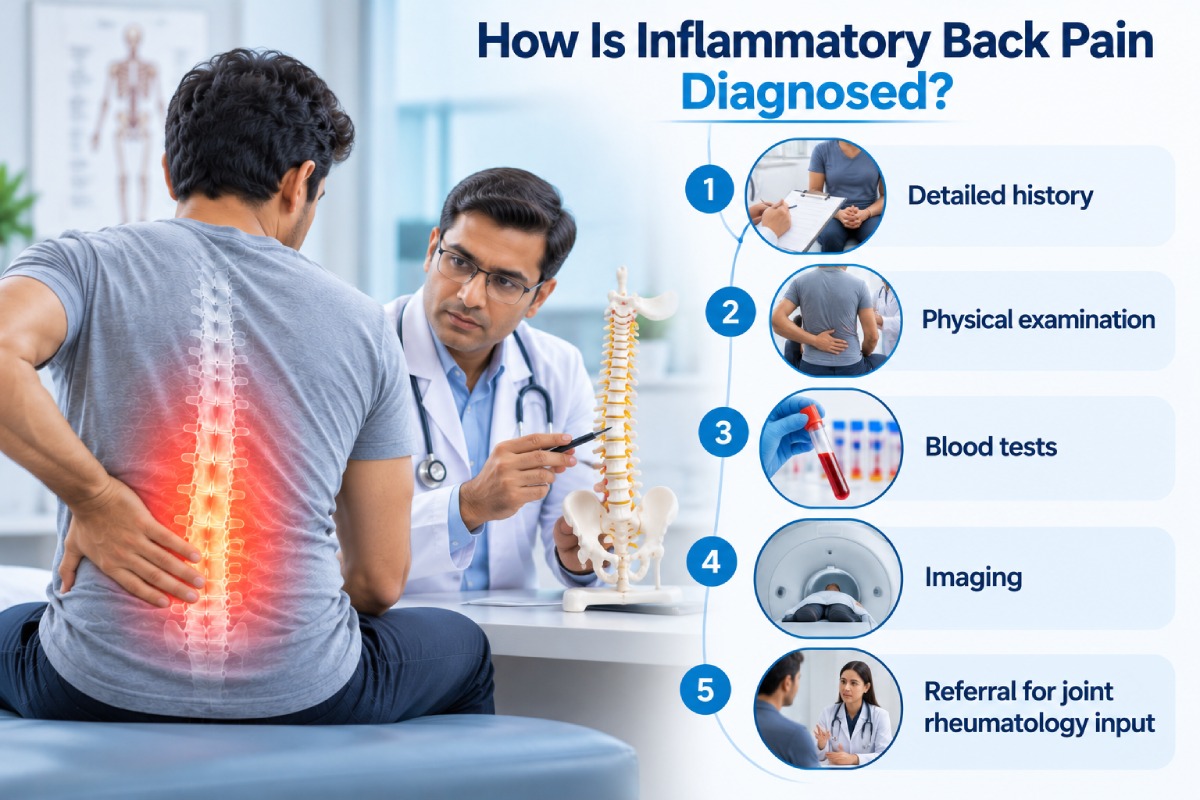
How Is Inflammatory Back Pain Diagnosed?
Diagnosis is not based on a single test – it combines your history, a physical exam, and targeted investigations.
- Detailed history: age of onset, duration, response to rest versus activity, and any associated symptoms like eye redness or psoriasis.
- Physical examination: checking spinal mobility, chest expansion, and tenderness over the sacroiliac joints.
- Blood tests: inflammatory markers (ESR, CRP) and the HLA-B27 genetic marker; rheumatoid factor and anti-CCP antibodies if rheumatoid arthritis is suspected.
- Imaging: X-rays of the pelvis and spine to look for changes in the sacroiliac joints; an MRI is often more useful in early disease, as it can detect inflammation before it shows up on X-ray.
- Referral for joint rheumatology input: orthopaedic and rheumatology care often work together for these conditions, especially once a diagnosis is confirmed.
Early diagnosis matters a great deal here. Unlike mechanical back pain, inflammatory back pain left untreated for years can lead to stiffening and fusion of the spine, which is much harder to reverse.
Treatment Options
The good news is that inflammatory back pain treatment can help control symptoms, improve mobility, and support an active lifestyle. The right approach depends on the underlying condition, its severity, and the patient’s response to treatment.
Medical treatment
For many patients, inflammatory back pain treatment combines appropriate medication, regular monitoring, and physiotherapy to reduce inflammation and maintain spinal mobility.
- NSAIDs (anti-inflammatory medication): often the first line of treatment and surprisingly effective for this specific type of back pain
- Disease-modifying drugs (DMARDs): used particularly when rheumatoid arthritis or associated joint involvement is present
- Biologic therapy: ankylosing spondylitis treatment may include biologic medicines for moderate to severe disease that remains active despite NSAIDs; treatment decisions are generally made with a rheumatologist.
- Local injections: for specific joints that are significantly inflamed
Physical treatment
- Structured physiotherapy focused on spinal mobility and posture, not just rest
- Breathing and chest expansion exercises, since ankylosing spondylitis can affect the rib joints over time
- Regular, guided physical activity: this condition is one of the few back conditions where staying active is part of the treatment itself
Unlike most causes of back pain, bed rest is not the answer here – in fact, prolonged rest tends to make inflammatory back pain worse.
Exercise and Lifestyle Advice
For patients managing inflammatory back pain, regular movement is an important part of inflammatory back pain treatment, helping maintain flexibility and reduce stiffness alongside the prescribed medical plan.
Some practical, India-friendly suggestions:
- Start the day with gentle stretching before getting out of bed – this helps ease morning stiffness faster
- Swimming is one of the best exercises, as it moves the spine through a full range of motion without impact
- Maintain an upright, supportive posture at the work desk; avoid long, uninterrupted hours in one position
- Practice deep breathing exercises a few times a day to maintain chest and rib flexibility
- Avoid smoking – it’s linked to faster spinal stiffening in ankylosing spondylitis
- Include anti-inflammatory foods such as leafy greens, nuts, and fish; limit excess processed and fried food common in daily Indian diets
- Stay consistent with low-impact activity like yoga or walking, even on days when stiffness is more noticeable
Recovery and Management Timeline
| Stage | What to Expect |
| First 2–4 weeks of treatment | Noticeable reduction in morning stiffness and night pain with NSAIDs and physiotherapy |
| 1–3 months | Improved spinal mobility; exercise tolerance builds with consistent physiotherapy |
| 3–6 months | Disease activity reassessed; medication adjusted if symptoms persist |
| Long-term (ongoing) | This is a chronic condition managed over years, not “cured” in weeks – but most patients achieve good symptom control and maintain an active lifestyle |
It’s important to set the right expectation here: inflammatory back pain is a long-term condition to manage well, not a short-term injury to heal from. With consistent treatment, most patients lead fully active lives, including sport and travel.
Prevention and Early Action Tips
- Don’t dismiss back stiffness in your 20s or 30s as “just posture” if it’s lasted more than a few months
- Track your symptoms – note whether rest helps or worsens the pain, and whether movement eases it
- Mention any history of psoriasis, eye inflammation, or digestive issues to your doctor, even if they seem unrelated to back pain
- If a family member has ankylosing spondylitis or rheumatoid arthritis, mention this during any back pain evaluation
- Avoid prolonged bed rest for back pain that doesn’t improve – get it assessed instead
- Keep up regular physical activity as a general habit, even before any diagnosis – spinal mobility is protective
When Should You Consult an Orthopaedic Surgeon?
Consult an orthopaedic surgeon in Thane if you notice:
- Back pain and stiffness lasting more than 3 months, especially if you’re under 40
- Morning stiffness in the back that takes more than 30 minutes to ease
- Back pain that wakes you at night or feels worse after resting
- Back pain alongside swelling in other joints, eye redness, or skin changes like psoriasis
- A family history of ankylosing spondylitis, rheumatoid arthritis, or related autoimmune conditions
- Back pain that hasn’t responded to usual rest, stretching, or physiotherapy after several weeks
An orthopaedic surgeon in Thane can assess your back pain pattern, recommend appropriate blood tests and imaging, and guide you towards rheumatology care when needed. This helps establish an accurate diagnosis instead of relying on repeated trial-and-error treatments for routine backache.
Frequently Asked Questions
1. What is the main difference between normal back pain and inflammatory back pain?
Normal (mechanical) back pain usually improves with rest and worsens with activity. Inflammatory back pain does the opposite – it improves with movement and worsens with rest, and often comes with prolonged morning stiffness.
2. Can young, fit people get inflammatory back pain?
Yes. Back pain in young adults can sometimes result from inflammatory conditions, particularly when symptoms begin before age 40. Physically active people in their 20s and 30s may experience persistent pain and stiffness that are mistaken for postural problems.
3. Is ankylosing spondylitis curable?
Ankylosing spondylitis is a chronic condition without a permanent cure, but appropriate ankylosing spondylitis treatment can help control symptoms and preserve mobility. Recognising ankylosing spondylitis symptoms early and following a personalised treatment plan can help many patients maintain an active lifestyle.
4. Does rheumatoid arthritis cause back pain?
Rheumatoid arthritis mainly affects smaller joints like the hands and wrists, but it can occasionally involve the neck (cervical spine). Lower back involvement is less typical and more often linked to spondyloarthritis conditions like ankylosing spondylitis.
5. What blood test is used to check for inflammatory back pain?
Doctors commonly check ESR and CRP for inflammation, along with the HLA-B27 genetic marker, which is strongly associated with ankylosing spondylitis.
6. Should I rest or exercise if I have inflammatory back pain?
Regular, gentle exercise is generally recommended over prolonged rest. Stretching, swimming, and guided physiotherapy can help reduce morning back stiffness and maintain mobility. If you’re asking, “Why is my back stiff in the morning?”, persistent stiffness that improves with movement should be discussed with a healthcare professional.
7. When should I worry about back pain and see a doctor?
See an orthopaedic surgeon if back pain and stiffness last more than 3 months, especially if you’re under 40, wake you up at night, or come with joint swelling, eye redness, or a family history of autoimmune disease.
Book a Consultation
If your back pain has lasted for months, worsens after rest, or causes persistent morning stiffness, seek a proper evaluation rather than continuing to guess. At Tushar Nursing Home, an orthopaedic surgeon in Thane can assess your symptoms and guide you towards appropriate investigations and specialist care.
We offer focused orthopaedic consultations for patients across Thane and Mumbai, with on-site imaging and blood testing support to help reach a clear diagnosis. Call or WhatsApp us to book an appointment, or visit our clinic for a walk-in consultation. Expertise. Precision. Mobility.
References
- Assessment of SpondyloArthritis International Society (ASAS) – Classification criteria for axial spondyloarthritis, asas-group.org
- American College of Rheumatology – Ankylosing spondylitis and spondyloarthritis patient resources, rheumatology.org
- National Health Service (NHS), UK – Ankylosing spondylitis overview, nhs.uk
- World Health Organization (WHO) – Musculoskeletal conditions fact sheet, who.int
- Indian Rheumatology Association – Patient education resources, indianrheumatology.org
This article is for general patient education and does not replace an in-person medical consultation. Please consult an orthopaedic surgeon or rheumatologist for diagnosis and treatment specific to your condition.