

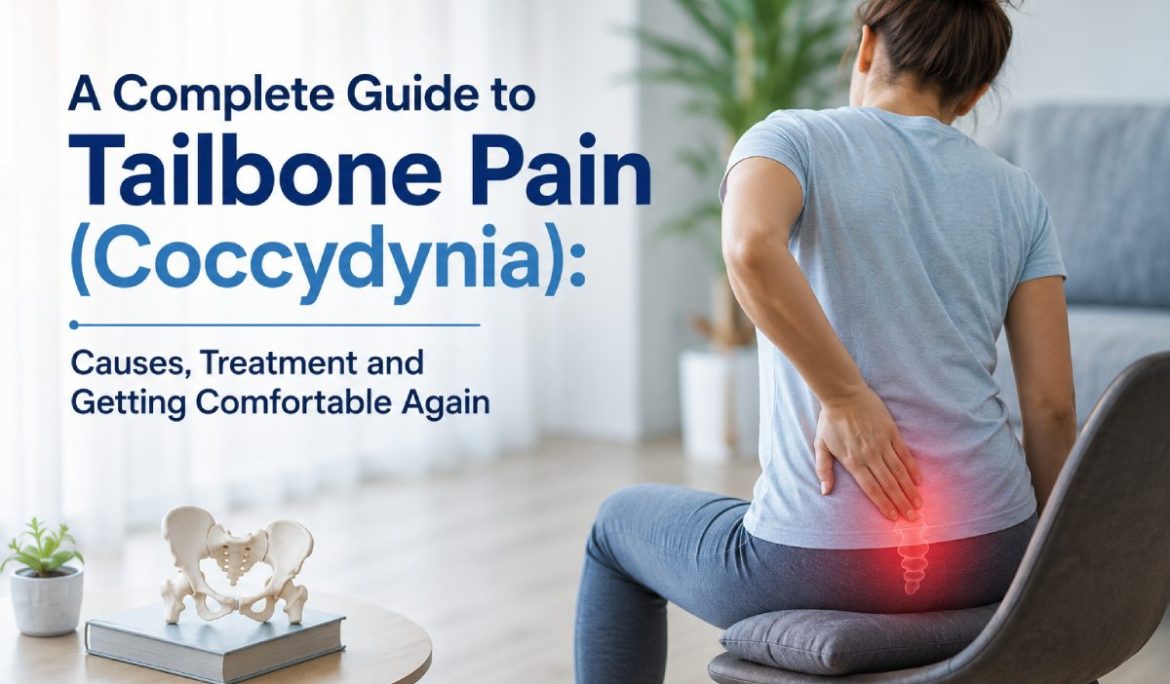
That Pain at the Bottom of Your Spine When You Sit?
You know the exact moment it happens. You ease yourself into your office chair, lean back slightly, and there it is a sharp, stabbing pain right at the very bottom of your spine. Or sometimes it is a deep, persistent ache that makes long meetings feel like a form of slow punishment. Standing up is just as bad. You have developed a technique for it shifting your weight to one side, pushing up from the armrests, hoping nobody notices the careful way you lower yourself back down.
This is coccydynia pain arising from the coccyx, more commonly known as the tailbone. It is a surprisingly common and surprisingly misunderstood condition. Many people suffer with it for months or even years, assuming it will ‘just go away’, not realising that effective treatments exist and most cases can be resolved without surgery.
In Thane and Mumbai, where a large working population spends 8-10 hours a day seated in offices, in vehicles, on public transport coccydynia is a condition we see regularly. It affects women more often than men, younger people as often as older ones, and desk workers as often as athletes. This article explains what the coccyx is, why it becomes painful, and what you can do about it. If you are searching for a tailbone doctor near me, understanding the exact cause of your symptoms is the first step toward effective coccydynia treatment.
What Is the Coccyx? Understanding the Anatomy
The coccyx (pronounced ‘kok-siks’) is the small, triangular bone at the very base of the spine. It consists of three to five fused vertebrae and forms the lowest segment of the vertebral column. It attaches to the bottom of the sacrum (the large triangular bone above it) via the sacrococcygeal joint.
Despite being small, the coccyx is not a vestigial or useless structure. It serves as an attachment point for several important muscles, ligaments, and tendons including muscles of the pelvic floor, the gluteus maximus, and the external anal sphincter. It also bears a portion of your body weight when you sit particularly when sitting in a reclined position. The sacrococcygeal joint has a small amount of normal movement (flexion and extension), which is why falls and direct impacts can cause the coccyx to fracture, dislocate, or become hypermobile all of which can result in chronic pain.
| Quick Anatomy Fact
When sitting upright with correct posture, the coccyx bears very little weight. When you slump backward into a reclined sitting position common at desks and on sofas the pelvis rotates and the coccyx becomes the primary contact point with the seat. This is why poor sitting posture is both a cause and an aggravating factor in coccydynia. |
Causes of Tailbone Pain: Why Does the Coccyx Hurt?
Coccydynia has several distinct causes, and identifying the right one is essential for choosing the most effective treatment.
1. Trauma- Falls and Direct Impacts
The most common cause. A backward fall onto a hard surface slipping on a wet floor, falling from a chair, a cycling accident, or landing hard on stairs can fracture or dislocate the coccyx. In Mumbai and Thane, falls during the monsoon season, railway station slips, and road accidents are common triggers.
Even without a clear fracture, a hard impact can damage the sacrococcygeal ligaments and cause chronic instability and pain that persists for months after the original injury. Early treatment for tail bone injury can reduce ongoing inflammation and improve long-term recovery after trauma. For many patients, the best way to heal tailbone injury is through an early clinical evaluation, activity modification, and an evidence-based rehabilitation plan.
2. Repetitive Strain from Prolonged Sitting
For office workers who sit for 8-10 hours a day on hard or poorly cushioned seats, repetitive low-grade pressure on the coccyx gradually inflames the sacrococcygeal joint and the surrounding soft tissues. This is particularly common in people who sit with a posterior pelvic tilt (lower back rounded, pelvis rolling backward) a nearly universal sitting habit in people without ergonomic awareness.
3. Childbirth
One of the most common causes in women. During labour, the coccyx must flex backward to allow the baby’s head to pass through the birth canal. In some deliveries particularly with large babies, prolonged labour, or instrumental delivery (forceps or vacuum) the coccyx is fractured or dislocated and does not heal in its correct position. Post-partum coccydynia can persist for months to years if not recognised and treated.
4. Hypermobility of the Coccyx
In some individuals, the sacrococcygeal joint has more movement than normal. During sitting-to-standing transitions, the coccyx moves excessively, pinching the adjacent soft tissues and producing sharp pain specifically with position changes. Dynamic X-rays (taken sitting and standing) are used to identify this pattern.
5. Referred Pain from Adjacent Structures
Not all pain felt in the coccyx region originates from the coccyx itself. The lumbar spine, sacroiliac joints, piriformis muscle, and pelvic floor structures can all refer pain to the coccygeal region. This is why a thorough assessment is important before attributing all tailbone pain to the coccyx. In some patients, lower back tailbone pain may originate from nearby spinal or pelvic structures rather than the coccyx itself, making a comprehensive examination essential.
6. Less Common Causes
- Pilonidal sinus- a skin condition involving a cyst or abscess near the tailbone; produces pain and swelling in the same region but requires dermatological or surgical treatment
- Sacral nerve root pathology- compression of S4 or S5 nerve roots can produce perineal and coccygeal pain
- Tumour (rare)- chordoma, a rare bone tumour, can arise at the sacrococcygeal junction and presents as deep, constant pain
- Idiopathic- in up to 30% of cases, no specific cause is identified despite thorough investigation
Who Is at Risk?
| Risk Group | Why They Are Vulnerable |
| Women | 5 times more common than men; pelvic anatomy places coccyx closer to sitting surface; childbirth risk |
| Desk workers (IT, finance, BPO) | 8–10 hours seated daily on hard or poorly cushioned chairs |
| Thin / low BMI individuals | Less padding over the coccyx; more direct pressure on the bone during sitting |
| Overweight individuals | Altered sitting mechanics place excessive load on the coccyx |
| Post-partum women | Obstetric trauma to the sacrococcygeal joint |
| Cyclists and rowers | Repetitive pressure and microtrauma to the coccyx |
| Recent fall or injury | Direct trauma even when X-ray is normal, soft tissue damage causes chronic pain |
An experienced spine specialist thane can correlate imaging findings with your symptoms to reach an accurate diagnosis.
Symptoms: How Coccydynia Presents
The symptoms of coccydynia are fairly characteristic, which makes it possible to suspect the diagnosis before any investigations.
Typical Symptoms
- Pain localised to the very base of the spine, between the buttocks — worse when pressing directly on the area
- Sitting pain- particularly on hard chairs, wooden seats, or during long meetings and car journeys
- Transition pain- the sharp discomfort felt specifically when moving from sitting to standing, often the most debilitating symptom
- Pain worse when leaning backward in a chair
- Discomfort during bowel movements, particularly if there is associated constipation
- Pain during sexual intercourse (in women)
- Aching or throbbing that lingers after prolonged sitting
Although coccydynia is localised to the coccyx, some patients may also experience lower back tailbone pain that worsens with prolonged sitting or changes in posture.
What Coccydynia Usually Does NOT Cause
- Numbness or tingling in the legs (suggests lumbar nerve involvement, not coccyx)
- Pain worsened by lying flat (coccyx is unloaded when lying — if lying is painful, consider sacral or lumbar pathology) Patients experiencing lower back tailbone pain that persists regardless of sitting position should undergo a thorough assessment to identify any associated spinal conditions.
- Fever or unintentional weight loss (rule out infection or malignancy)
- Swelling, redness, or discharge near the tailbone (consider pilonidal sinus or abscess)
| When Tailbone Pain Needs Urgent Assessment
See a doctor promptly if your tailbone pain is accompanied by: visible swelling, redness, warmth, or a lump near the coccyx; pain at night unrelated to position; unexplained weight loss or fatigue; fever or discharge near the area; numbness or weakness in the legs or bladder/bowel changes. These features suggest a cause beyond simple coccydynia that requires urgent investigation. |
Diagnosis: How Is Coccydynia Confirmed?
Clinical Assessment
Diagnosis begins with a careful history: the onset, nature of the pain, aggravating and relieving factors, any history of trauma, and obstetric history in women. A rectal examination is often the most informative clinical test the examiner can directly palpate the coccyx and assess its mobility, tenderness, and alignment. This straightforward examination, though unfamiliar to many patients, provides more information than most imaging.
A spine specialist thane can combine clinical findings with imaging to accurately diagnose the cause of persistent tailbone pain. A thorough clinical evaluation helps determine the most appropriate coccydynia treatment near me based on the underlying cause of the pain.
Imaging
| Investigation | What It Shows | When It’s Used |
| X-ray (lateral coccyx view) | Fracture, dislocation, bony spurs, coccyx angle | First-line; always obtained |
| Dynamic X-rays (sitting & standing) | Hypermobility of sacrococcygeal joint; coccyx angulation change with position | When hypermobility is suspected |
| MRI of sacrum and coccyx | Disc pathology, soft tissue oedema, stress reaction, tumour exclusion | Atypical pain, red flags, or persistent unresponsive pain |
| CT scan | Bony anatomy in detail; occult fractures | Complex fractures or pre-procedural planning |
| Bone scan | Stress reactions, occult fractures, inflammatory activity | When other imaging is inconclusive |
One important note: a ‘normal’ X-ray does not mean the coccyx is not the source of pain. Patients looking for coccydynia treatment near me should undergo a complete clinical assessment rather than relying on imaging alone. Soft tissue injury, hypermobility, and early inflammatory changes may not be visible on plain X-ray. An MRI or dynamic films may be needed for a complete picture. Patients with persistent or complex coccyx pain may benefit from an evaluation by the best spine surgeon in thane to determine the most appropriate treatment approach.
If symptoms persist despite home care, a tailbone doctor near me may recommend additional investigations such as dynamic X-rays or MRI.
Treatment Options: From Simple Measures to Specialist Procedures
The good news about coccydynia is that approximately 85–90% of cases respond to conservative (non-surgical) treatment. Patience and consistency are the key ingredients. Here is a structured, step-by-step approach.
Step 1: Immediate Measures- Reduce the Load
Coccyx Cushion (Donut or Coccyx Cut-Out Cushion)
This is the single most immediately effective self-help measure. A coccyx cushion has a U-shaped or wedge cut-out at the back, which removes the pressure from the coccyx during sitting. Using one on your office chair, in the car, and on any hard seat can dramatically reduce pain within days. These are widely available in medical supply stores across Thane and Mumbai and online. They range from basic foam to memory foam and gel variants. Invest in a quality one it will be used every day.
Modify Sitting Position
Sit toward the front of the chair, keeping the spine upright and the pelvis in a neutral (not rolled-back) position. Avoid slumping backward, which transfers weight directly onto the coccyx. Leaning slightly forward relieves coccygeal pressure significantly.
Anti-Inflammatory Medication
A short course of NSAIDs (ibuprofen or diclofenac) reduces local inflammation around the sacrococcygeal joint. Use for 5-7 days to get initial pain relief under control. Not a long-term solution. If pain continues despite these measures, a tailbone doctor near me can determine whether further evaluation or specialised treatment is required.
Early treatment for tail bone injury should focus on reducing pain, protecting the coccyx, and preventing further irritation during daily activities.
Step 2: Physiotherapy
A personalised coccydynia treatment plan often includes physiotherapy to reduce pain, improve mobility, and restore normal sitting function.
Physiotherapy for coccydynia focuses on the surrounding structures rather than the coccyx itself:
- Pelvic floor relaxation and stretching- tight pelvic floor muscles contribute significantly to coccygeal pain
- Piriformis and hip external rotator stretching- these muscles attach near the coccyx and, when tight, increase pressure on it
- Gluteal and hip muscle strengthening- reduces the load transferred to the coccyx during sitting-to-standing transitions
- Postural correction and movement retraining- learning to sit and transition positions without coccygeal loading
- Manual therapy and internal coccyx mobilisation (performed by a trained physiotherapist)- can be effective for hypermobile or malpositioned coccyx
Physiotherapy is often considered the best way to heal tailbone injury by improving mobility, posture, and muscle balance.
Step 3: Injection Therapy
Coccygeal Nerve Block / Ganglion Impar Block
The ganglion impar is a small nerve ganglion located just in front of the sacrococcygeal junction. Injecting local anaesthetic and a corticosteroid here provides significant, often rapid pain relief in coccydynia. This is performed under fluoroscopy (X-ray guidance) or CT guidance as a day procedure.
Studies show that a ganglion impar block provides meaningful relief in 60-80% of patients with refractory coccydynia. It can be repeated if the first injection provides partial benefit.
Sacrococcygeal Joint Injection
A direct injection of local anaesthetic and steroid into the sacrococcygeal joint reduces inflammation and pain at the joint itself. Particularly useful for post-traumatic coccydynia and cases of sacrococcygeal joint degeneration.
PRP (Platelet-Rich Plasma)
For cases with significant soft tissue injury or ligamentous instability around the coccyx, PRP injections can stimulate healing and reduce chronic inflammation. An emerging option at specialist centres.
Step 4: Surgery- Coccygectomy (Last Resort)
Surgical removal of the coccyx (coccygectomy) is considered only after 12-18 months of comprehensive conservative treatment has failed. It is effective in well-selected patients studies report 80–90% satisfaction rates but carries risks of wound healing problems (due to the proximity to the anus) and a prolonged recovery.
Surgery is rarely needed and should only be considered after injection therapy has been tried and assessed. The vast majority of coccydynia patients never require surgery. When surgery is considered, consulting the best spine surgeon in thane helps ensure that every suitable non-surgical option has been evaluated before proceeding.
Treatment Options at a Glance
| Treatment | Best For | Expected Benefit | Evidence |
| Coccyx cushion | All patients immediately | Immediate pressure relief | High — first-line |
| Posture correction + physio | Postural and mild traumatic cases | 4–8 weeks | Moderate-High |
| NSAIDs (short course) | Acute pain management | Days | Moderate |
| Ganglion impar block | Moderate to severe; failed conservative Rx | Days to 2 weeks | High (60–80% response) |
| Sacrococcygeal joint injection | Post-traumatic; joint degeneration | Days to 2 weeks | Moderate-High |
| PRP injection | Ligamentous instability, chronic soft tissue | 4–8 weeks | Emerging |
| Coccygectomy (surgery) | Failed all else after 12–18 months | 3–6 months | High in selected patients |
Exercises for Tailbone Pain Relief
These gentle exercises help by stretching the muscles that attach near the coccyx, relaxing the pelvic floor, and improving hip mobility. They are appropriate for most patients with coccydynia. Stop any exercise that directly worsens your tailbone pain.
1. Child’s Pose (Balasana)
Kneel on the floor. Sit back toward your heels (or as far as comfortable). Stretch your arms forward on the floor and lower your chest toward the ground. Hold for 30–60 seconds. This gently decompresses the sacrococcygeal junction and stretches the lower back and gluteal muscles. Repeat 3 times.
2. Piriformis Stretch (Figure-4 Stretch)
Lie on your back with both knees bent. Cross the right ankle over the left knee to form a figure-4 shape. Gently pull the left thigh toward your chest until you feel a stretch deep in the right buttock. Hold 30 seconds. Switch sides. 3 repetitions each. The piriformis muscle runs close to the coccyx; tightness here contributes significantly to coccygeal pain.
3. Pelvic Floor Relaxation Breathing
Sit or lie comfortably. Take a slow deep breath in, allowing the belly and pelvic floor to relax and expand downward (not contract). Hold for 2-3 seconds. Exhale slowly. This deliberately relaxes the pelvic floor, which often becomes habitually guarded in patients with coccydynia. 10 repetitions, twice daily.
4. Glute Bridge
Lie on your back, knees bent, feet flat. Tighten your abdominals and slowly lift your hips off the floor until your body forms a straight line from knees to shoulders. Hold 5 seconds. Lower slowly. 3 sets of 10. Strengthens the gluteus maximus without loading the coccyx, improving sitting-to-standing mechanics.
5. Knee-to-Chest Stretch
Lie on your back. Gently draw one knee toward your chest, holding it with both hands. Hold for 30 seconds. Switch sides. Then draw both knees to the chest together and gently rock side to side. Loosens the sacroiliac joint and lower lumbar spine, reducing referred tension to the coccyx.
Recovery: How Long Does Coccydynia Take to Heal?
Patients with prolonged recovery may benefit from a review by the best spine doctor in thane to identify any underlying factors delaying healing.
| Cause / Severity | Expected Recovery Timeline |
| Mild postural coccydynia (no trauma) | 4-8 weeks with cushion + physio + posture correction |
| Acute traumatic (fall, non-displaced fracture) | 6-12 weeks with conservative management |
| Post-partum coccydynia | 3-6 months; may need injection therapy if not resolving |
| Hypermobile coccyx | Variable; injection therapy often needed; 3–6 months |
| Chronic coccydynia (>3 months) | 3-6+ months; ganglion impar block significantly accelerates recovery |
| Post-surgical (coccygectomy) | 3-6 months for wound healing and functional recovery |
Following medical advice remains the best way to heal tailbone injury, particularly after fractures, dislocations, or significant soft tissue injuries. Coccydynia is one of the more stubborn musculoskeletal conditions not because it is severe, but because patients often continue to stress the area daily simply by sitting. Consistency with the cushion, posture changes, and exercises matters more than any single treatment.
If symptoms fail to improve as expected, a spine specialist thane can reassess your condition and recommend the next stage of treatment. Appropriate treatment for tail bone injury, combined with consistent rehabilitation, can significantly improve long-term recovery and sitting comfort.
Prevention: Protecting Your Tailbone
- Use a coccyx cushion at your desk proactively particularly if you have a history of tailbone pain, sit for more than 6 hours a day, or have a thin body frame
- Maintain upright sitting posture sit toward the front of the chair, weight on your sitting bones (ischial tuberosities), not the coccyx
- Take regular standing and movement breaks every 45-60 minutes; sustained sitting compresses all pelvic structures
- Wear appropriate protection during sports padded cycling shorts for cyclists; protective gear for contact sports
- Treat acute falls promptly do not dismiss tailbone pain after a fall; early physiotherapy and a coccyx cushion prevent chronic coccydynia from developing
- Post-partum: do not ignore tailbone pain after delivery early physiotherapy and ergonomic advice prevents months of chronic pain
- Choose good seating firm, well-cushioned chairs with lumbar support are better for the coccyx than very soft sofas (which cause posterior pelvic tilt) Using a cushion for coccyx pain during long periods of sitting can also help prevent recurrent irritation.
When Should You See an Orthopaedic Surgeon?
Consulting the best spine doctor in thane can help ensure persistent tailbone pain is evaluated with an appropriate treatment plan.
Self-manage for 2-3 weeks with a coccyx cushion and posture changes. But see a specialist if:
- Pain persists beyond 4-6 weeks despite a proper coccyx cushion, posture correction, and over-the-counter pain relief
- Pain is severe enough to significantly disrupt your work, daily activity, or sleep
- Pain began after a fall and has not improved within 3-4 weeks
- Pain is accompanied by any of the red flag features listed above (swelling, fever, bladder changes)
- You are post-partum and tailbone pain is affecting your ability to care for your baby or return to work
- You have tried physiotherapy but symptoms are not improving. Patients searching for coccydynia treatment near me should seek specialist evaluation when symptoms persist despite appropriate conservative care.
- You want a clear diagnosis and a structured treatment plan rather than continuing to manage symptoms blindly
Orthopaedic and spine specialists in Thane, Navi Mumbai, and Mumbai can assess your coccyx clinically and with appropriate imaging, and guide you toward the right treatment from a targeted injection to a structured physiotherapy programme. Patients with complex or long-standing coccyx conditions may benefit from an opinion from the best spine surgeon in thane.
Frequently Asked Questions (FAQ)
What is coccydynia and what causes tailbone pain?
Coccydynia is pain arising from the coccyx (tailbone) the small triangular bone at the very base of the spine. It can be caused by a direct fall or trauma, prolonged sitting on hard surfaces, childbirth, a hypermobile sacrococcygeal joint, or gradually through repetitive pressure from poor sitting posture. In about 30% of cases, no single identifiable cause is found. It is significantly more common in women than men.
How do I know if my tailbone is broken or just bruised?
Both fractures and severe bruising (contusions) of the coccyx cause similar symptoms pain on sitting, tenderness on direct pressure, and discomfort during bowel movements. X-rays can identify a fracture, but soft tissue injuries are not visible on plain X-ray. Importantly, the treatment for a coccygeal fracture is virtually the same as for a severe bruise: a coccyx cushion, pain medication, and time. Surgical fixation of a coccyx fracture is almost never required.
How long does tailbone pain last?
Mild coccydynia from a minor fall or postural irritation typically resolves within 4-12 weeks with conservative measures. More significant injuries fractures, dislocations, or post-partum coccydynia may take 3-6 months. Chronic coccydynia (present for more than 3 months) is less likely to resolve spontaneously and typically benefits from injection therapy. Without any treatment, coccydynia can persist for years in some patients.
Is a coccyx cushion really helpful?
Yes, significantly. A coccyx cushion with a U-shaped or cut-out rear section removes direct pressure from the tailbone during sitting, which is the primary aggravating factor. Most patients notice immediate partial relief when they switch to a proper coccyx cushion. It will not cure the underlying problem but dramatically reduces daily pain and prevents ongoing irritation while the underlying tissue heals. It is the single most important immediate self-help measure for coccydynia.
Can tailbone pain go away on its own?
Mild to moderate coccydynia often improves significantly with conservative measures over 4-12 weeks. However, it rarely disappears completely without any intervention the patient typically needs to make postural changes, use a coccyx cushion, and do some targeted stretching. Chronic coccydynia (lasting more than 3 months) has a lower rate of spontaneous resolution and is more likely to require injection therapy for full recovery.
What is a ganglion impar block and does it hurt?
The ganglion impar is a small nerve cluster at the front of the sacrococcygeal junction that transmits pain signals from the coccyx region. A ganglion impar block involves injecting local anaesthetic and corticosteroid directly onto this nerve ganglion under X-ray or CT guidance. The procedure takes 15-20 minutes, is done under local anaesthesia, and patients typically experience only minimal discomfort. Studies show a 60-80% significant pain relief rate. It is the most effective non-surgical treatment for moderate to severe or chronic coccydynia.
Can I sit at work with tailbone pain?
Yes, with the right equipment and posture. Use a coccyx cushion on your office chair. Sit upright toward the front of the seat with your weight on the ischial tuberosities (sitting bones), not rolling back onto the coccyx. Avoid sustained sitting for more than 45-60 minutes without a brief stand and walk. Many patients with coccydynia continue to work comfortably with these adjustments while they recover.
Does tailbone pain get worse during periods?
Yes, in some women. Hormonal changes during menstruation increase ligamentous laxity throughout the pelvis, which can temporarily worsen coccygeal instability and pain. Additionally, uterine cramping and pelvic floor tension during menstruation can refer pain to the coccygeal region. Women who notice a consistent cyclical pattern to their tailbone pain should mention this to their specialist, as it may influence treatment decisions.
Is tailbone pain common after childbirth?
Yes. Post-partum coccydynia is well-documented. During vaginal delivery, particularly with large babies, prolonged pushing, or instrumental delivery, the coccyx may be fractured, dislocated, or subjected to significant ligamentous stress. Many women attribute their persistent tailbone pain to ‘sitting wrong after delivery’ and do not seek treatment, allowing it to become chronic. Early physiotherapy including pelvic floor rehabilitation and coccyx mobilisation where appropriate significantly shortens recovery.
When is surgery needed for tailbone pain?
Surgery (coccygectomy surgical removal of the coccyx) is considered only after a prolonged trial of conservative management typically 12-18 months including physiotherapy, posture modification, and at least one or two injection therapies, has failed to provide adequate relief. In well-selected patients, it has good outcomes, but it is a last resort due to the risk of wound complications in that anatomical region. The vast majority of coccydynia patients never require surgery.
| A Note from Our Practice
Tailbone pain is one of those conditions that patients often feel embarrassed to mention or assume nothing can be done about. Neither is true. Coccydynia is a well-understood, very treatable condition, and most patients we see recover fully with the right combination of simple measures and targeted treatment. If sitting has become something you dread, if every long meeting is a source of private misery, or if you have been managing this on your own for months without improvement it is time for a proper assessment. Book a consultation today and sit comfortably again sooner than you think. |
This article is written for educational purposes and does not replace personalised medical advice. Please consult a qualified orthopaedic surgeon for diagnosis and treatment specific to your condition.