

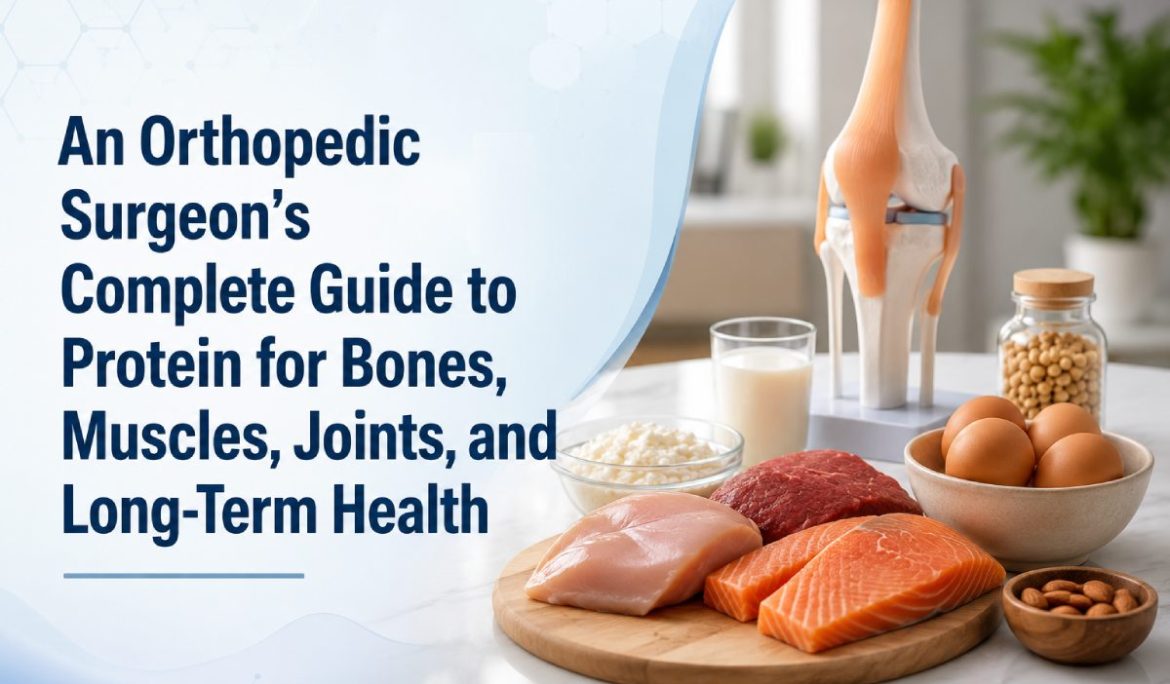
You Exercise. You Watch What You Eat. But Are You Getting Enough Protein?
Most people in Thane and Mumbai who come to an orthopaedic clinic with weak bones, frequent stress fractures, slow-healing injuries, or chronic muscle pain have one thing in common that surprises them: they are significantly protein-deficient. Not because they are malnourished. Not because they cannot afford good food. But simply because, in the average Indian diet, heavy on rice, chapati, and dal, protein is consistently consumed at levels well below what the body needs for optimal musculoskeletal health.
Studies have found that over 70% of urban Indians consume less protein than recommended. Among vegetarians, the figure is higher. Among women over 40, it is even higher still. As an orthopaedic surgeon in Thane, protein is not a nutrition topic I can ignore. Every bone fracture that needs to heal, every tendon that has been repaired, every patient recovering from joint surgery- they all depend on adequate protein intake. And for those trying to prevent osteoporosis, sarcopenia (muscle loss with age), or recurrent soft-tissue injuries, protein is one of the most powerful tools available.
This article explains why protein matters for your bones and muscles, how much you actually need, the best sources for Indian dietary habits, vegetarian and non-vegetarian, and an honest assessment of protein supplements: what they offer and what they do not. Consulting an experienced orthopedic surgeon in Thane and trusted bone and joint doctors can also help patients searching for a muscle specialist near me identify nutritional gaps affecting recovery.
Why Protein Matters for Bone, Muscle, and Joint Health?
Protein is the body’s primary building material. It is not just for bodybuilders. Every tissue in the body- bone, muscle, tendon, cartilage, ligament, skin- is built from protein. Here is what adequate protein specifically does for musculoskeletal health:
For Bones
Adequate protein supports stronger bones, but persistent bone pain or delayed healing should also be evaluated by a bone specialist thane. If you’re searching for a bone doctor near me, experienced bone and joint doctors can identify nutritional and underlying orthopedic concerns early.
- Approximately 50% of bone volume and 33% of bone mass is made of protein (primarily collagen). Calcium and minerals fill in around this protein scaffold, but without the scaffold, calcium has nowhere to go
- Protein stimulates the production of IGF-1 (Insulin-Like Growth Factor 1), which promotes bone formation and remodelling.
- Studies consistently show that higher protein intake is associated with greater bone mineral density and lower fracture risk, particularly in adults over 50.
- Patients recovering from a hip or vertebral fracture heal significantly faster with adequate protein intake.
For Muscles
A muscle specialist doctor near me can assess persistent weakness linked to poor protein intake.
- Muscles are approximately 25% protein by wet weight. Without adequate dietary protein, the body cannot maintain muscle mass; it begins breaking down existing muscle for the amino acids it needs elsewhere.
- After the age of 30, adults lose approximately 0.5–1% of muscle mass per year (sarcopenia). This rate accelerates after 50. Adequate protein intake, combined with resistance exercise, is the most effective strategy to slow this loss.
- Strong muscles protect joints. Weak muscles from protein deficiency accelerate arthritis and increase injury risk.
For Tendons, Cartilage, and Healing
An orthopedic surgeon in Thane also emphasises optimal protein intake to support tissue repair and improve surgical recovery.
- Tendons and cartilage are primarily made of collagen, a structural protein. Adequate protein provides the amino acids (especially glycine, proline, and hydroxyproline) needed to produce and repair collagen.
- After orthopaedic surgery (ACL reconstruction, rotator cuff repair, fracture fixation), protein requirements increase by 25–50% as the body diverts resources toward tissue repair.
- Poor protein intake after surgery is directly associated with slower wound healing, higher infection risk, and prolonged recovery.
| How Much Protein Do You Actually Need?
The recommended dietary allowance (RDA) for protein set by the Indian Council of Medical Research (ICMR) is 0.8–1.0 g per kg of body weight per day for sedentary adults. However, this is a minimum to prevent deficiency, not an optimal intake for musculoskeletal health. Current evidence-based recommendations by group: • Sedentary adult: 0.8–1.0 g/kg/day • Active adult/office worker with regular exercise: 1.2–1.4 g/kg/day • Gym-goers with strength training goal: 1.6–2.0 g/kg/day • Adults over 60 (to counter sarcopenia): 1.2–1.5 g/kg/day • Post-surgery / fracture recovery: 1.5–2.0 g/kg/day Practical example: A 65 kg office worker doing moderate exercise needs approximately 78–91 g of protein daily. The average Indian urban diet provides approximately 40–50 g. The gap is real and significant. |
Signs You May Be Protein Deficient
Protein deficiency is rarely dramatic in its early stages. It creeps up gradually and is often attributed to other causes.
Watch for these signs:
- Frequent muscle cramps and aches that are out of proportion to your activity level
- Slow recovery after exercise, muscle soreness lasting more than 3–4 days
- Poor wound healing after a cut, surgery, or injury
- Brittle nails, hair thinning, or loss
- Fatigue and weakness despite adequate sleep
- Swelling in the legs (oedema) in severe deficiency; protein helps maintain fluid balance
- Stress fractures or frequent bone fractures from minor trauma
- Loss of muscle bulk, particularly in the thighs and upper arms, in adults over 50
Consult an orthopedic surgeon in Thane if these symptoms persist despite dietary improvements.
Best Protein Sources: The Indian Diet Context
The great news for Indian patients is that excellent protein sources exist across all dietary preferences, vegetarian, vegan, and non-vegetarian. The challenge is quantity and variety, not availability.
Top Protein Sources for Non-Vegetarians
| Food | Protein per 100g (cooked) | Notes |
| Chicken breast (grilled) | 31 g | Highest protein-to-calorie ratio; widely available and affordable |
| Fish, rohu, pomfret, surmai | 20–25 g | Excellent source; rich in omega-3 too; very common in the Mumbai coastal diet |
| Eggs (whole) | 13 g per 100g (6g per egg) | Complete protein; one of the most affordable and versatile sources |
| Egg whites | 11 g per 100g | Pure protein; zero fat; ideal for those limiting cholesterol |
| Mutton / lean beef | 25-28 g | High protein; higher saturated fat; 2–3 times per week is reasonable |
| Prawns/shrimps | 24 g | High protein, low fat; popular in Mumbai; good for variety |
Top Vegetarian Protein Sources
| Food | Protein per 100g (cooked/ready) | Notes |
| Paneer (low-fat) | 18-20 g | Excellent source; widely consumed; choose low-fat for a higher protein ratio |
| Greek yoghurt / hung curd | 10 g | Higher protein than regular dahi; excellent breakfast option |
| Chana/chickpeas (cooked) | 9 g | Also provides fibre and iron; combine with grain for a complete amino acid profile |
| Rajma/kidney beans | 9 g | Protein + fibre + iron; a staple across North India |
| Moong dal (cooked) | 7 g | Easy to digest; good for all ages, including the elderly and post-surgery |
| Soya chunks/granules | 52 g (dry) / 17g (rehydrated) | Highest plant protein by weight; complete amino acid profile |
| Tofu (firm) | 17 g | Good soya protein; absorbs flavours well; low calorie |
| Quinoa (cooked) | 4-5 g | Complete protein grain; gluten-free; growing availability in Mumbai & Thane |
| Edamame (boiled) | 11 g | Young soya beans; complete protein; excellent snack option |
| Pumpkin seeds/hemp seeds | 19–32 g | Concentrated protein; good for adding to salads, curd, or smoothies |
Top Vegan Protein Sources
Vegans face the additional challenge of combining plant proteins to ensure complete essential amino acid coverage. No single plant food (except soya and quinoa) provides all nine essential amino acids in adequate amounts.
- The solution is combination: rice + dal, roti + rajma, or any grain + legume together covers all amino acids
- Soya in all forms (tofu, soya milk, soya chunks, edamame) is the highest quality plant protein and the most complete
- Spirulina (a blue-green algae powder) contains approximately 57 g of protein per 100 g and is a complete protein, useful as a supplement for vegans
- Nutritional yeast provides complete protein and is rich in B12, often deficient in vegans
- Hemp seeds, pumpkin seeds, and chia seeds are protein-dense and easy to add to Indian dishes
| Sample High-Protein Day for a 65 kg Vegetarian Indian Adult (Target: 85 g protein)
Breakfast: 2 eggs (or 100g paneer bhurji) + 1 cup Greek yoghurt = ~25 g protein Mid-morning snack: Handful of roasted chana or 1 scoop whey in water = ~15–25 g protein Lunch: 2 chapati + 1 cup rajma + 100g curd + salad = ~20 g protein Evening snack: 30g pumpkin seeds or edamame = ~8–10 g protein Dinner: 150g tofu / soya sabzi + dal + 1 cup moong dal soup = ~20 g protein Total: approximately 88–90 g, meeting the target for an active adult of this weight. |
Protein Supplements: An Honest Assessment
Walk into any gym in Thane or Mumbai, and you will find rows of brightly labelled protein supplements promising muscle growth, weight loss, and peak performance. The market is enormous, and unfortunately, so is the misinformation. Here is a clear, evidence-based guide to what protein supplements are, when they are genuinely useful, and when they are not necessary.
Types of Protein Supplements Available in India
| Supplement Type | Source | Protein per Serving | Best For | Suitable for Vegetarians? |
| Whey protein concentrate | Cow’s milk (dairy) | 18–22 g per 30g scoop | Gym-goers, post-workout recovery | Yes (lacto-vegetarian) |
| Whey protein isolate | Cow’s milk (purified) | 25–27 g per 30g scoop | Lactose-sensitive; lean muscle building | Yes (lacto-vegetarian) |
| Casein protein | Cow’s milk (slow-release) | 24–26 g per scoop | Nighttime recovery; sustained release | Yes (lacto-vegetarian) |
| Plant protein (soya) | Soya beans | 20–24 g per scoop | Vegans: complete plant protein | Yes (vegan) |
| Plant protein blend | Pea + rice + hemp | 18–22 g per scoop | Vegans; allergy-sensitive individuals | Yes (vegan) |
| Egg white protein | Egg whites | 24 g per scoop | Lactose-intolerant non-vegetarians | No |
| Mass gainers | Whey + carbs + sugar | 25–40 g per serving | Underweight individuals only | Yes (usually) |
| Collagen peptides | Animal connective tissue | 10–18 g per serving | Joint health, skin, tendon recovery | No (animal source) |
Well-Known Brands Available in India (Overview)
Several reputable brands are widely available across Thane, Mumbai, and online:
- MuscleBlaze (Indian brand): one of the most popular and cost-effective whey protein brands; manufactured in India with FSSAI certification; good for those starting out
- ON (Optimum Nutrition) Gold Standard Whey: global benchmark for quality; widely trusted; third-party tested; available in most supplement stores and online
- Dymatize ISO100: high-quality whey isolate; low in lactose; suitable for those with mild lactose sensitivity
- MyProtein: UK brand with strong quality control; good value; available in India online
- Nakpro: newer Indian brand with transparent ingredient lists; more affordable; worth considering
- Oziva Plant Protein: plant-based protein (pea + brown rice) with added micronutrients; good for vegans and those who prefer natural formulations
- Orgain Organic Protein: USDA-certified organic plant-based protein; available online; good for those who prioritise clean ingredients
Note: Brand availability and formulations change. Always check that the supplement carries FSSAI certification and has not been recalled or flagged by regulators before purchasing. A bone specialist in Thane or muscle doctor near me can recommend supplements based on your recovery goals and nutritional requirements.
When Protein Supplements Are Genuinely Useful?
A bone specialist in Thane or muscle specialist near me can determine whether protein supplementation is beneficial based on your health, activity level, and recovery needs.
- Post-orthopaedic surgery or fracture recovery: meeting elevated protein needs through food alone is difficult; a supplement is a practical bridge
- Gym-goers targeting muscle hypertrophy who consistently cannot meet 1.6–2.0 g/kg through food
- Vegetarians and vegans who struggle to reach daily protein targets through whole foods
- Elderly adults (over 65) with reduced appetite who cannot eat sufficient food volume
- Athletes and sportspeople with high training loads and limited meal preparation time
When Protein Supplements Are NOT Necessary
- When you are already meeting your daily protein target through whole foods
- When you are sedentary and not doing resistance training, excess protein is simply excreted or converted to fat
- As a meal replacement: protein shakes are not meals. They lack the fibre, phytonutrients, and micronutrient complexity of whole foods
- For children or teenagers: unless specifically prescribed by a paediatrician or dietitian for a medical condition
| Hazards and Precautions: What the Supplement Industry Won’t Tell You
Heavy metal contamination: Independent testing organisations have found elevated levels of lead, cadmium, arsenic, and mercury in plant-based protein supplements in particular. This is not a manufacturing error; these metals are naturally present in soil and concentrate in plant material. Choose brands that publish third-party independent testing certificates (look for Informed Sport, NSF Certified, or Labdoor certification). Kidney load: Protein supplements are safe for healthy individuals with normal kidney function. However, for those with pre-existing kidney disease, diabetes with nephropathy, or a family history of kidney stones, high protein intake requires medical supervision. Never exceed 2.5 g/kg/day without medical guidance. Adulteration and mislabelling: The Indian supplement market has had documented cases of adulteration and label mislabelling (protein content claimed to be higher than actual). Purchase only from authorised sellers, original brand websites, or reputable platforms. Avoid unlabelled powders sold loose at local gyms. Added sugars and artificial ingredients: Mass gainers and flavoured supplements often contain significant quantities of sugar, artificial sweeteners, colours, and preservatives. Read the ingredient list carefully. Look for products where protein is the first or second ingredient and sugar is minimal. Banned substance risk for competitive athletes: Cross-contamination with banned substances occurs in supplement manufacturing facilities that produce multiple product lines. Competitive athletes should use only Informed Sport or WADA-compliant certified supplements. |
| Checklist: Choosing and Using Protein Supplements Safely
1. Check for FSSAI certification on the label before purchasing 2. Prefer brands with third-party testing certificates (Informed Sport, NSF, Labdoor) 3. Avoid unlabelled powders, bulk powders, or products without clear ingredient lists 4. Read the ingredient list; protein should be the first or second ingredient; sugar should be minimal 5. Start with one scoop per day; assess tolerance before increasing 6. Mix with water, milk, or a light smoothie, not with high-sugar juices 7. Do not use as a meal replacement: use as a supplement to whole food meals 8. Stay well hydrated; protein metabolism requires adequate water intake 9. Consult your doctor first if you have kidney disease, diabetes, gout, or are on medication 10. If you develop digestive discomfort, switch from concentrate to isolate (lower lactose), or try a plant-based protein |
Protein and Osteoporosis: What the Research Says
Osteoporosis, the progressive loss of bone density, is a growing problem in India, particularly among postmenopausal women. It is also significantly underdiagnosed. A common misconception is that calcium is the only dietary factor that matters for bone health.
Protein is equally important. Here is why:
- Collagen (a protein) forms the organic matrix of bone. Calcium and minerals crystallise within this matrix. Without adequate collagen, bones become brittle even when calcium is sufficient.
- Epidemiological studies show that higher protein intake is associated with higher bone mineral density and lower hip fracture risk in both men and women over 50.
- However, protein must be consumed alongside adequate calcium (1000–1200 mg/day for adults over 50) and Vitamin D (at least 1000 IU/day; higher for those with documented deficiency) for the bone-protective effect to be maximised.
- In postmenopausal women, protein intake of 1.0–1.2 g/kg/day combined with resistance exercise is one of the most effective evidence-based strategies to slow bone loss.
If you are searching for a bone and joint doctor near me, bone doctor near me, or bone specialist Thane, early nutritional assessment can strengthen bone health and reduce future fracture risk.
Protein Intake Around Exercise and Surgery: Getting the Timing Right
Following guidance from a muscle specialist doctor near me and an orthopedic surgeon in Thane helps optimise protein intake for effective healing and muscle recovery.
For Gym-Goers and Active Individuals
- Consume 20–40 g of high-quality protein within 60 minutes after resistance training. This is the window of maximum muscle protein synthesis.
- Spread protein intake across 3–4 meals throughout the day. The body can efficiently use approximately 30–40 g of protein per meal; consuming 100 g in one sitting is not more effective than 4 x 25 g servings.
- A pre-sleep protein serving (casein or curd) has been shown to enhance overnight muscle recovery and reduce muscle breakdown.
For Post-Surgical and Fracture Recovery Patients
- Protein requirements increase significantly after surgery; aim for 1.5–2.0 g/kg/day during the healing phase.
- Collagen supplementation (10–15 g/day of collagen peptides with Vitamin C) has emerging evidence for improving tendon and cartilage healing after surgery.
- Iron, zinc, and Vitamin C should accompany increased protein intake as they are cofactors for collagen synthesis and immune function post-surgery.
If appetite is poor after surgery (common), a protein supplement in liquid form is a practical way to meet targets without forcing large meals.
When Should You Consult an Orthopaedic Surgeon or Nutritionist?
Protein is food, not medicine, and most adults can safely increase their intake by improving their diet.
However, seek professional advice if:
- You have had a fracture from relatively minor trauma and have not had a bone density scan (DEXA scan); this may indicate osteoporosis requiring full assessment
- You are recovering from orthopaedic surgery and want personalised guidance on protein and nutritional needs during recovery
- You have kidney disease, diabetes, gout, or are on immunosuppressive medication; protein requirements and safe limits need medical supervision
- You have noticed progressive muscle wasting, weakness, or difficulty rising from chairs; these may be signs of sarcopenia requiring evaluation
- You are planning to start protein supplementation and have any pre-existing health conditions
Orthopaedic surgeons in Thane, Navi Mumbai, and Mumbai work alongside nutritionists and sports medicine practitioners to provide integrated care. If you have ongoing musculoskeletal problems and have never had your nutritional status assessed, it is worth raising this at your next consultation.
Frequently Asked Questions (FAQ)
How much protein do I need per day as an Indian vegetarian?
As a vegetarian adult doing moderate activity (30-45 minutes of exercise most days), aim for 1.2-1.4 g of protein per kg of body weight per day. For a 60 kg person, that is approximately 72-84 g daily. The average Indian vegetarian diet provides only 40-50 g, so most vegetarians need to deliberately increase their intake through paneer, curd, eggs (if lacto-ovo), dal, soya products, and seeds, or use a plant-based protein supplement to bridge the gap.
Is protein powder safe for daily use?
Yes, for healthy adults without pre-existing kidney or liver conditions, protein powder is safe for daily use. It is a food ingredient, not a drug. The key is choosing a quality, certified product, using it to supplement rather than replace whole food meals, and not exceeding 2–2.5 g/kg/day total protein intake. Stay well hydrated (at least 2–3 litres of water per day when on high protein intake), and if you have any medical conditions, consult your doctor first.
Can too much protein harm the kidneys?
In people with healthy kidneys, current evidence does not support the idea that high protein intake (up to 2.5 g/kg/day) causes kidney damage. However, in individuals with pre-existing kidney disease, chronic kidney impairment, or diabetic nephropathy, high protein intake can accelerate the progression of kidney damage. This is why it is important to have a basic kidney function test before starting a high-protein diet or supplement if you have diabetes, hypertension, or a family history of kidney disease.
What is the best protein powder for vegetarians in India?
For lacto-vegetarians, whey protein (concentrate or isolate) is the most cost-effective and highest-quality option. Whey isolate is better for those with lactose sensitivity. For vegans, a soya protein supplement or a pea + rice protein blend provides a complete amino acid profile. OZiva Plant Protein, MuscleBlaze Biozyme Plant Protein, and Orgain Organic Protein are among the better-reviewed plant-based options available in India. Always check for third-party certification.
Does eating too much protein cause weight gain?
Protein is the most satiating macronutrient and has a high thermic effect (the body uses more energy to digest protein than carbohydrates or fat). Moderate to high protein diets are associated with better weight management and reduced body fat in most studies. However, any macronutrient consumed in excess of total caloric needs will be stored as fat. Mass gainer supplements, which combine large amounts of protein with carbohydrates and sugar, can cause weight gain intentionally for underweight individuals, but undesirably for those trying to maintain or lose weight.
Can protein help with osteoporosis?
Yes, significantly. Protein provides the structural matrix (collagen) around which bone mineralises. Studies show that protein intake in the range of 1.0-1.2 g/kg/day is associated with higher bone mineral density and lower hip fracture risk in older adults. For maximum benefit, protein intake should be combined with adequate calcium (from dairy, ragi, and green leafy vegetables), Vitamin D supplementation (commonly deficient in India), and resistance exercise. A DEXA scan is recommended for all women over 50 and men over 65 to assess current bone density.
Is protein important after orthopaedic surgery?
Critically so. After surgery, the body’s protein requirements increase by 25-50% as resources are diverted to wound healing, immune function, and tissue repair. Inadequate protein after surgery is directly associated with slower healing, higher infection risk, and prolonged recovery. Most patients are not counselled on this. As a general guide, aim for 1.5-2.0 g/kg/day of protein in the 8-12 weeks following orthopaedic surgery, prioritising high-quality complete protein sources.
What is the difference between whey concentrate and whey isolate?
Both are derived from milk during the cheese-making process. Whey concentrate is less processed and contains 70-80% protein by weight, along with some lactose and fat. Whey isolate is further purified to contain 90-95% protein, with most of the lactose and fat removed. Isolate is more expensive but is better tolerated by those with lactose sensitivity, has a higher protein density per serving, and is generally considered cleaner in composition. For most people without lactose sensitivity, concentrate is sufficient and more economical.
Are plant proteins as good as animal proteins?
Animal proteins (whey, eggs, meat, fish) are complete proteins; they contain all nine essential amino acids in proportions that closely match human needs. Most plant proteins (except soya and quinoa) are incomplete; they are deficient in one or more essential amino acids. However, by combining different plant proteins (grains + legumes), vegans can consistently achieve a complete amino acid profile. Soya protein in particular has been shown in multiple studies to be comparable to whey in terms of muscle protein synthesis when consumed in equivalent amounts.
How do I add more protein to a typical Indian diet without major changes?
Small, consistent changes add up. Replace some rice or chapati at one meal with 100g of paneer, soya sabzi, or an egg curry. Add a cup of Greek yoghurt or hung curd to your daily routine. Snack on roasted chana, pumpkin seeds, or edamame instead of biscuits and namkeen. Add 2 tablespoons of seeds to your dal or curd. Have a glass of warm milk or buttermilk at bedtime. These changes alone can add 20-30 g of protein daily without high cost or cooking changes.
| A Note from Our Practice
Nutrition is not separate from orthopaedic care; it is foundational to it. Every fracture we treat, every tendon we repair, every joint we reconstruct depends on the body’s ability to heal. And that healing is built from protein. If you have been dealing with slow recovery from injury, weak bones, chronic muscle fatigue, or frequent soft tissue problems, a nutritional assessment alongside your orthopaedic care may be one of the most important steps you can take. Book a consultation today, and let’s talk about building a stronger body from the inside out. |
This article is written for educational purposes and does not replace personalised medical or nutritional advice. Please consult a qualified doctor or registered dietitian for guidance specific to your health condition and goals.