

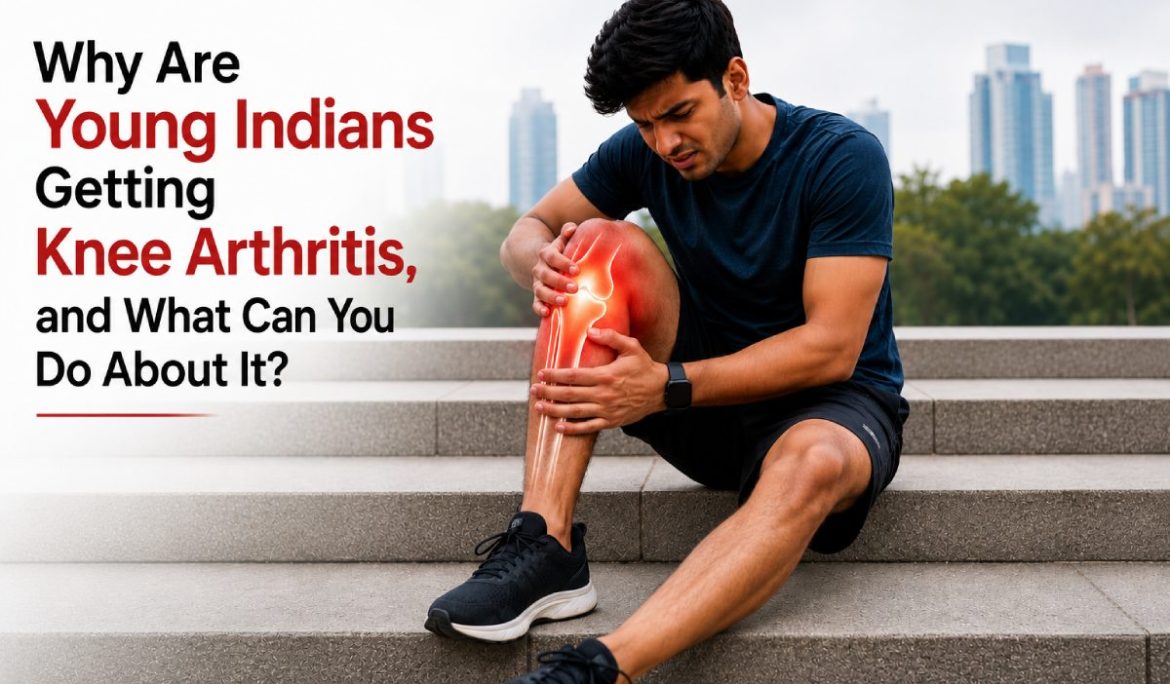
A complete, doctor-informed guide to understanding, preventing, and treating knee arthritis before it steals your mobility, and why joint preservation is your best first option.
Orthopaedic Review · India-specific guidance · 8 min read
| 15 Cr+ | 30s–40s | 3× Rise | 80% |
| Indians with knee arthritis | Age-related arthritis now appears | In young patients (10 yrs) | Cases preventable with early care |
Knee arthritis is no longer a disease of old age. Orthopaedic clinics across India, from Mumbai to Jaipur, Bengaluru to Lucknow, are seeing patients in their 30s and 40s limping in with worn-out knees. Desk jobs, bad habits, extra weight, and years of ignoring early pain have created a silent epidemic. The good news? If caught early, your knee can be saved without replacement surgery. Early arthritis treatment in Thane can help preserve knee function and delay surgery.
Why Are Young Indians Getting Knee Arthritis? The Real Causes
Obesity & Rapid Weight GainEvery extra kilogram puts 3–5 kg of extra load on the knee joint. With India’s fast-changing food habits, this is the #1 cause in urban youth. |
Sedentary Desk JobsLong hours of sitting weaken the thigh (quadriceps) muscles that protect the knee. Weak muscles = more pressure on cartilage. |
Floor Sitting & SquattingProlonged sitting cross-legged (sukhasana) or squatting for prayers, cleaning, and Indian-style toilets puts extreme stress on knee cartilage over time. |
Sports Injuries Without RehabAn old ACL tear, meniscus injury, or fracture that was never properly treated becomes arthritis in 10–15 years. |
Family History & GeneticsIf your parents or grandparents had knee problems, your risk is higher. Genetics affects cartilage quality and knee alignment. |
Vitamin D & Calcium DeficiencyIndia has one of the world’s highest rates of Vitamin D deficiency. Weak bones accelerate cartilage wear and joint degeneration. |
Abnormal Knee AlignmentBow legs (genu varum) or knock knees (genu valgum) unequally distribute weight on one side of the knee, wearing it out faster. |
Occupational StressConstruction workers, farmers, domestic helpers, and labourers face repeated kneeling, climbing, and heavy lifting that grinds the knee joint daily. |
Early diagnosis and arthritis treatment in Thane by experienced Orthopaedic doctors near me can significantly slow cartilage degeneration and preserve mobility.
Know the Warning Signs, Don’t Ignore These Symptoms
Know the Warning Signs, Don’t Ignore These Symptoms
Important: Most people dismiss early knee arthritis as “tiredness” or “age.” By the time severe pain arrives, significant cartilage damage has already occurred. Recognise these signs early.
- Morning Stiffness Lasting More Than 30 Minutes
Your knee feels locked or stiff when you wake up and takes a long time to “warm up.” This is often the very first sign of arthritis. - Pain While Climbing Stairs or Rising from a Chair
Stairs and getting up from sitting put 3–7× your body weight on the knee. Pain during these activities is a red flag for cartilage damage. - Swelling & Warmth Around the Knee
Fluid accumulation (effusion) inside the joint causes visible swelling. The knee may feel warm to the touch due to internal inflammation. - Crepitus, Grinding, or Cracking Sounds
A grating, clicking, or cracking sensation during movement (especially when bending the knee) suggests cartilage roughening. - Reduced Range of Motion
You can no longer fully bend or straighten the knee. Activities like sitting cross-legged or squatting become impossible or very painful. - Pain After Rest That Improves with Movement
Called “start-up pain,” this is a hallmark of osteoarthritis; pain is worst after inactivity and gets slightly better once you start moving. - Giving Way or Instability
The knee suddenly “gives out” or buckles during walking. This signals that the supporting muscles and ligaments are under severe strain.
Ignoring persistent knee symptoms often delays arthritis treatment in Thane, even when experienced bone and joint clinics near me are easily accessible.
The Footwear Mistakes Destroying Your Knees
Shoes are the foundation of your entire lower limb. The wrong footwear changes the angle and load on your knee with every single step, thousands of times a day.
AVOID THESE |
DOCTOR-RECOMMENDED |
| Flat chappals (hawai slippers): zero arch support, shocks travel directly to the knee | Cushioned walking shoes with built-in arch support |
| High heels (>2 inches), shift weight forward, increase knee force by up to 23% | Medially wedged insoles for people with bow legs (varus knees) |
| Worn-out sneakers: lost cushioning does more harm than old, flat sandals | Laterally wedged insoles for knock-knee alignment |
| Narrow, pointed shoes affect gait and increase lateral knee stress | Shoes with a small heel-to-toe drop (8–12 mm) for shock absorption |
| Walking barefoot on hard floors (marble, concrete) for long periods | Anti-fatigue mats at kitchen/workstations if standing for long hours |
| Flip-flops for workouts or long walks, no lateral support at all | Custom orthotics prescribed by your orthopaedic surgeon |
Indian-specific concern:
Removing footwear at temples, schools, and homes means millions of Indians walk long distances barefoot on hard marble and stone daily. If you have knee arthritis, always carry indoor sandals with cushioning.
JOINT PRESERVATION: Save Your Knee, Skip the Replacement
Most people believe that once knee arthritis is diagnosed, the only option is to “wait for it to get bad enough” for a knee replacement. This is completely wrong, and waiting often makes outcomes worse.
Joint preservation surgery and non-surgical methods aim to treat arthritis at an earlier stage, buying you 10–20 more years of natural knee function. The goal: keep
Your own knee is working as long as possible.
- Preserve your natural cartilage instead of removing the joint
- Return to sports, exercise, and an active lifestyle sooner
- Avoid or significantly delay the need for knee replacement
- Younger patients recover faster and maintain better long-term function
- Procedures are minimally invasive with shorter hospital stays
- Psychological benefit: keeping your own biological knee
Consulting the best orthopedics near me and specialised bone and joint clinics near me helps patients explore knee-saving treatments before replacement becomes necessary.
Treatment Options, From Conservative to Surgical
Modern arthritis treatment in Thane is offered through advanced bone and joint clinics near me, and experienced Orthopedic doctors near me focus on preserving mobility, reducing pain, and delaying major joint replacement whenever clinically possible.
STEP 1 · LIFESTYLE & NON-SURGICAL
Weight Loss, Physiotherapy & Activity Modification
Losing even 5–10% of body weight can dramatically reduce knee pain. A structured physiotherapy programme strengthens quadriceps and hamstrings, the knee’s natural shock absorbers. Low-impact activities like swimming, cycling, and walking on soft surfaces are encouraged. Avoid running on concrete, deep squatting, and floor sitting.
STEP 2 · MEDICATIONS & INJECTIONS
Anti-Inflammatories, Supplements & Intra-Articular Injections
Short-term NSAIDs (under doctor supervision) reduce inflammation. Glucosamine and chondroitin supplements may support cartilage health. Viscosupplementation (Hyaluronic Acid injections) lubricates the joint and can reduce pain for 6–12 months. Platelet-Rich Plasma (PRP) injections promote natural healing and are increasingly popular in India for early-to-moderate arthritis.
STEP 3 · JOINT PRESERVATION SURGERY
High Tibial Osteotomy (HTO), Realigning the Knee
If you have bow legs or knock knees causing one-sided arthritis, an osteotomy corrects the bone alignment to shift weight away from the damaged area. This surgery is ideal for patients aged 30–55 with partial arthritis (one compartment). It is a joint-saving procedure with excellent long-term results, allowing patients to return to physically demanding lifestyles and even sports.
STEP 4 · CARTILAGE RESTORATION
Microfracture, OATS, ACI & MACI Procedures
For localised cartilage defects (not whole-joint arthritis), several procedures can regenerate cartilage: Microfracture stimulates new cartilage growth; OATS (Osteochondral Autograft Transfer) transplants healthy cartilage from another part of the knee; ACI/MACI (Autologous Chondrocyte Implantation) grows your own cartilage cells in a lab and reimplants them. These are game-changing procedures for young, active patients.
STEP 5 · PARTIAL OR TOTAL REPLACEMENT
Unicompartmental or Total Knee Replacement, Last Resort
When joint preservation is no longer viable (severe, whole-joint arthritis), a Unicompartmental Knee Replacement (UKR) replaces only the damaged side of the knee, a more conservative alternative to total replacement. Total Knee Replacement (TKR) remains the gold standard for end-stage arthritis, but should ideally be deferred in patients under 60.
Choosing timely arthritis treatment in Thane with the best orthopedic near me improves recovery outcomes and helps maintain long-term knee function naturally.
The tragedy we see in India is patients who come to us at 45 with completely worn-out knees, telling us they had mild pain for 10 years but assumed it would go away. Had they come to us at 35 with that mild pain, we could have preserved their natural knee for another 20 years with a simple procedure. Joint preservation works best when it begins early.
Senior Orthopaedic & Joint Preservation Surgeon · Tertiary Care Hospital, India
Common Myths vs. Medical Facts
MYTHArthritis only happens after 60. I’m too young to have it. |
FACTArthritis is being diagnosed in Indians as young as 25–30, especially with obesity, post-traumatic injury, and sedentary lifestyles. Age is no longer a shield. |
MYTHRest is the best treatment for knee pain. |
FACTComplete rest weakens muscles further. Guided, low-impact exercise and physiotherapy are far more effective at managing arthritis than bed rest. |
MYTHOnce you have arthritis, surgery is the only option. |
FACTEarly-to-moderate arthritis responds very well to physiotherapy, injections, bracing, and joint preservation surgery. Knee replacement is a last resort, not a first step. |
MYTHCracking your knuckles or knees causes arthritis. |
FACTJoint cracking releases gas bubbles and does not cause arthritis. However, cracking sounds combined with pain and swelling are warning signs worth checking. |
MYTHYoga and walking will fix my knee arthritis completely. |
FACTGentle yoga and walking help with pain management, but cannot reverse structural damage. Certain yoga poses (deep squats, lotus) can actually worsen cartilage damage in arthritic knees. |
Doctor-Recommended Product Categories for Knee Arthritis
Always consult your orthopaedic doctor before purchasing. These are product categories your doctor may recommend, not brand endorsements.
Knee Braces & SupportsSUPPORT & STABILITY Offloader braces for varus/valgus deformity; neoprene sleeves for mild arthritis. Reduces pain and gives proprioceptive feedback to the joint. |
Orthotic InsolesBIOMECHANICAL CORRECTION Custom or semi-custom insoles correct foot pronation/supination, improve gait mechanics, and reduce the load on the affected knee compartment. |
Ergonomic Walking SticksLOAD REDUCTION A correctly-fitted walking stick (held on the opposite side to the bad knee) offloads 20–30% of the knee joint force. Foldable, lightweight options are available. |
Hot & Cold Therapy PacksPAIN RELIEF Reusable gel packs for alternating hot/cold therapy. Cold reduces acute swelling; heat relaxes muscles and improves circulation in chronic stiffness. |
Exercise Cycles & Aqua EquipmentSAFE EXERCISE Stationary cycling and water-based exercise are the two best joint-friendly cardiovascular activities for arthritic knees. Recumbent cycles are ideal for home use. |
Raised Toilet Seats & Ergonomic ChairsDAILY LIVING AIDS Raised toilet seats reduce the extreme knee bend required by Indian and Western-style toilets. Ergonomic chairs maintain a proper leg angle to reduce pressure. |
Supplements (Doctor-Prescribed)NUTRITIONAL SUPPORT Vitamin D3 + K2, Calcium, Omega-3 fatty acids, Glucosamine sulphate, and Curcumin (turmeric extract) are commonly recommended for joint health in Indian patients. |
Physiotherapy Apps & TENS UnitsHOME REHAB Home TENS devices for drug-free pain relief. Guided physio apps with knee-specific programmes help maintain consistency between clinic visits. |
SEE A JOINT PRESERVATION SPECIALIST IF YOU HAVE…
Don’t wait until you need a knee replacement. Early evaluation by an orthopaedic surgeon experienced in joint preservation changes outcomes dramatically.
- Knee pain for 3+ months
- Pain under 50 years of age
- Swelling or morning stiffness
- Post-sports injury without proper rehabilitation
- Bow legs or knock-knee alignment
- Difficulty climbing stairs or rising from sitting
Ask your doctor specifically about joint preservation options, HTO, cartilage procedures, PRP, and viscosupplementation, before consenting to any replacement surgery.
Medical Disclaimer: This article is for general educational and awareness purposes only. It is not a substitute for professional medical advice, diagnosis, or treatment. All treatment decisions should be made in consultation with a qualified orthopaedic surgeon based on individual clinical evaluation, imaging (X-rays, MRI), and medical history. Product categories mentioned are illustrative only and do not constitute brand endorsement.